


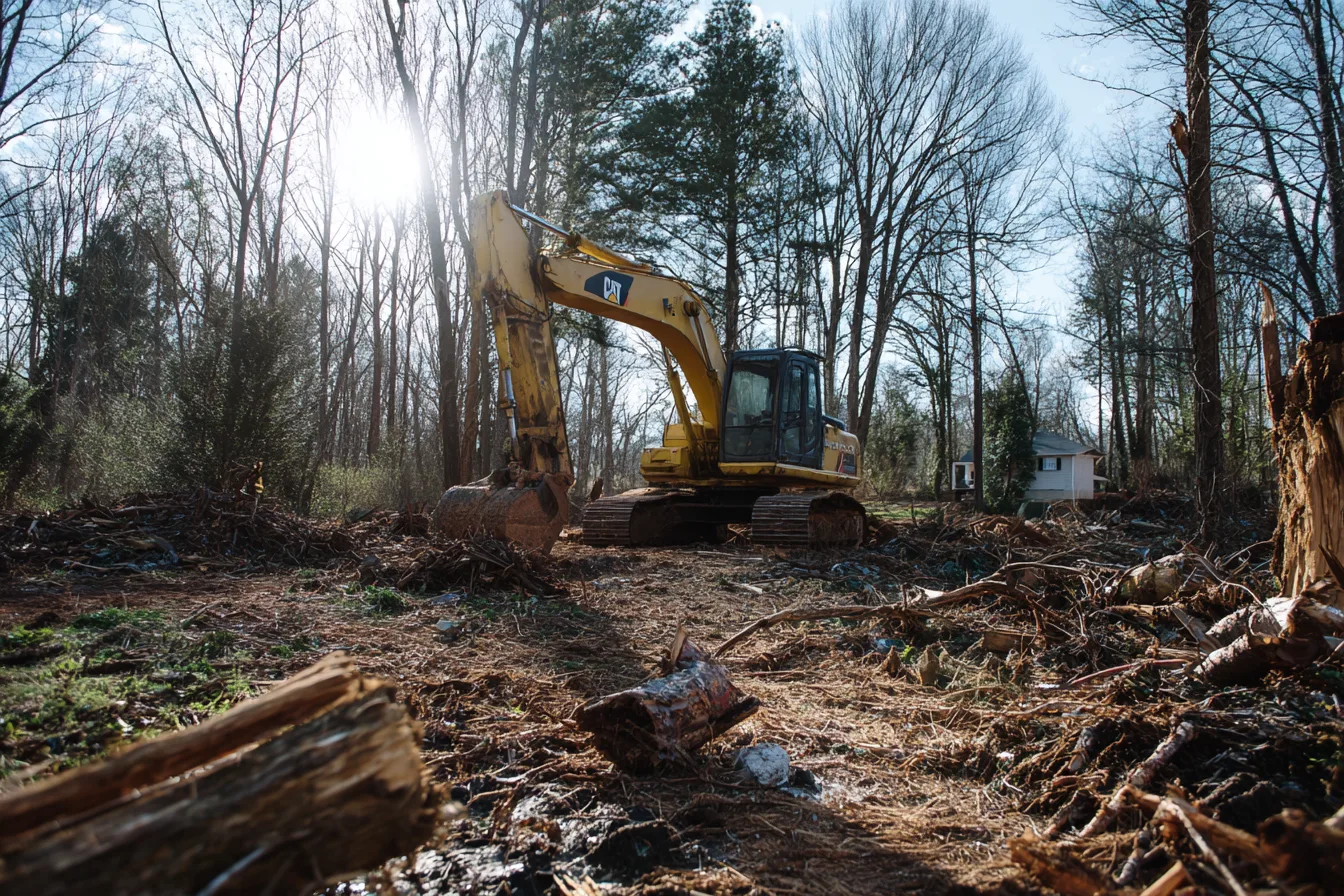






Clearing Your Land: A Barndominium Site Prep Checklist
Proper land clearing for barndominium construction is one of the most critical early steps in your build. Get it right, and your project moves smoothly into foundation work. Get it wrong, and you risk drainage issues, unstable soil, costly delays, and even structural problems down the line.
This guide walks you through everything you need to know—from evaluating your land to executing a professional-grade site prep plan—so your barndominium starts on solid ground.
Why Land Clearing Matters for Barndominiums
Barndominiums and pole barns rely heavily on proper site conditions. Unlike traditional homes, many barndo builds use slab-on-grade or post-frame construction, which means the ground beneath your structure must be stable, well-drained, and properly compacted.
If you’re still exploring structural designs, check out pole barns construction design to understand how site prep directly impacts structural performance.
Key Risks of Poor Land Clearing
- Foundation settling or cracking
- Water pooling or improper drainage
- Rot or insect issues from leftover organic material
- Increased excavation and grading costs later
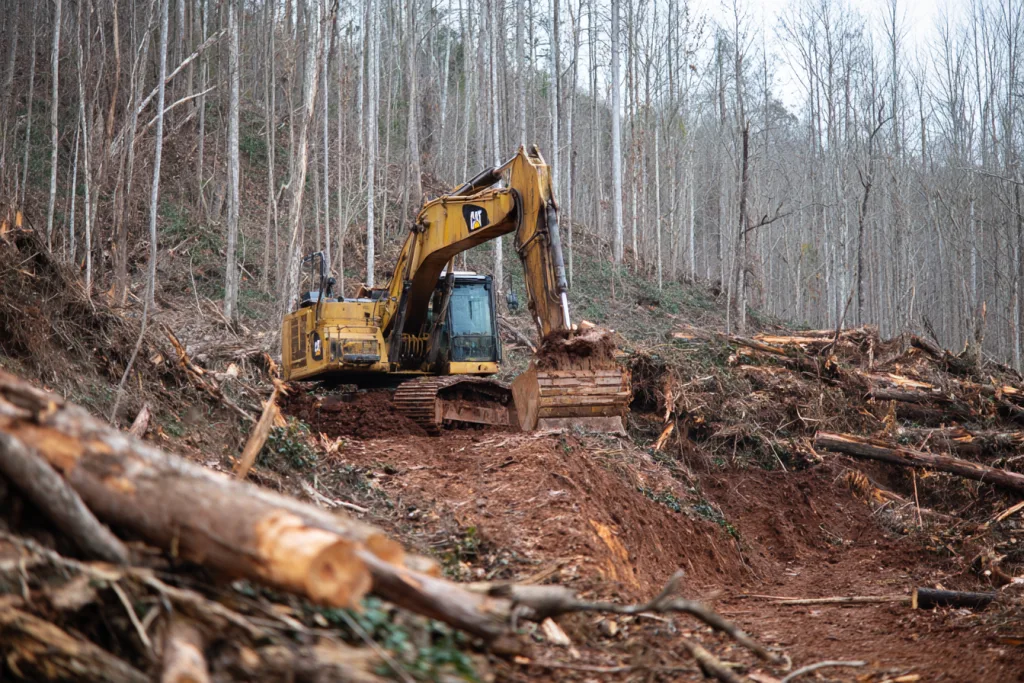
excavator grading land and removing stumps during barndominium site preparation process
Step-by-Step Land Clearing Checklist
1. Evaluate and Survey Your Land
Before touching a tree or moving dirt, understand your property.
- Confirm property boundaries (survey recommended)
- Identify slopes, elevations, and drainage patterns
- Conduct soil testing for load-bearing capacity
- Locate utilities and easements
Environmental considerations may apply depending on your location. Government forestry and land-use resources like the U.S. Forest Service provide guidance on responsible land management practices.
2. Secure Permits and Verify Regulations
Skipping permits can halt your project or lead to fines.
- Check local zoning laws
- Verify tree removal restrictions
- Confirm erosion control requirements
- Determine setback and grading rules
3. Remove Vegetation and Trees
This is the most visible part of land clearing for barndominiums.
- Cut and remove trees
- Clear brush and undergrowth
- Grind or remove stumps
- Remove root systems to prevent future soil shifting
4. Strip Topsoil
Organic topsoil is not suitable for foundations.
- Remove 4–12 inches of topsoil (depending on site conditions)
- Stockpile usable soil for landscaping later
- Expose stable subsoil for building
5. Grade and Level the Site
Proper grading ensures water flows away from your structure.
- Establish a slight slope away from the building pad
- Create a level building footprint
- Prepare driveways and access points
6. Address Drainage and Erosion Control
Barndominiums require solid drainage planning, especially with slab foundations.
- Install French drains if needed
- Create swales to redirect water
- Add gravel or drainage layers
- Use erosion control measures like silt fencing
7. Soil Compaction and Final Prep
This step ensures your foundation sits on stable ground.
- Compact soil in layers
- Test compaction levels
- Add fill dirt where needed
- Finalize pad elevation
Land Clearing Methods: Which One Is Right?
Manual Clearing
- Best for: Small plots or light vegetation
- Pros: Lower cost, more control
- Cons: Labor-intensive, time-consuming
Mechanical Clearing
- Best for: Medium to large properties
- Pros: Fast and efficient
- Cons: Higher equipment costs
Forestry Mulching
- Best for: Eco-friendly clearing
- Pros: Reduces erosion, leaves mulch layer
- Cons: May not remove roots completely
How Much Does Land Clearing for a Barndominium Cost?
Costs vary significantly based on land conditions.
- Light clearing (minimal trees): $1,500–$3,000 per acre
- Moderate clearing: $3,000–$5,000 per acre
- Heavy clearing (dense forest): $5,000–$10,000+ per acre
Additional costs may include:
- Stump removal
- Soil testing
- Grading and excavation
- Permit fees
Common Mistakes to Avoid
- Skipping soil tests before clearing
- Leaving roots and organic material in place
- Ignoring drainage planning
- Over-clearing and removing too much topsoil
- Not accounting for future structures (driveways, shops, etc.)
Practical Land Clearing Checklist
- Survey property boundaries
- Complete soil and site analysis
- Obtain permits and approvals
- Remove trees, brush, and stumps
- Strip topsoil and relocate usable material
- Grade and level building pad
- Install drainage systems
- Compact soil properly
- Mark foundation layout
Key Takeaways
- Land clearing is more than removing trees—it’s full site preparation
- Proper grading and drainage are critical for barndominium longevity
- Soil compaction directly impacts foundation stability
- Costs vary widely based on land condition and clearing method
- Planning ahead prevents expensive corrections later
Frequently Asked Questions
What is the first step in land clearing for a barndominium?
The first step is evaluating your land with a survey, soil testing, and drainage assessment before any physical clearing begins.
Do you need permits for land clearing?
Yes, most municipalities require permits for tree removal, grading, and erosion control. Always check local regulations before starting.
How long does land clearing take?
Small projects may take a few days, while large or heavily wooded properties can take several weeks depending on complexity.
Can I clear land myself?
You can handle light clearing, but heavy equipment and professional expertise are recommended for large-scale or structural builds.
What happens to removed trees and debris?
They are typically hauled away, burned (if allowed), or mulched on-site depending on local regulations and contractor practices.
Is forestry mulching enough for building prep?
No, it’s useful for vegetation removal, but roots and organic matter still need to be removed for proper foundation support.
Do I need to clear the entire property?
No, only clear areas needed for your home, driveway, utilities, and future expansion to preserve natural surroundings.
How do I prevent erosion after clearing?
Use silt fencing, temporary ground cover, and proper drainage systems to control runoff and soil loss.
With the right approach to land clearing for barndominium construction, you set the stage for a smoother build, fewer surprises, and a structure that lasts for decades.


What do you think?
It is nice to know your opinion. Leave a comment.