
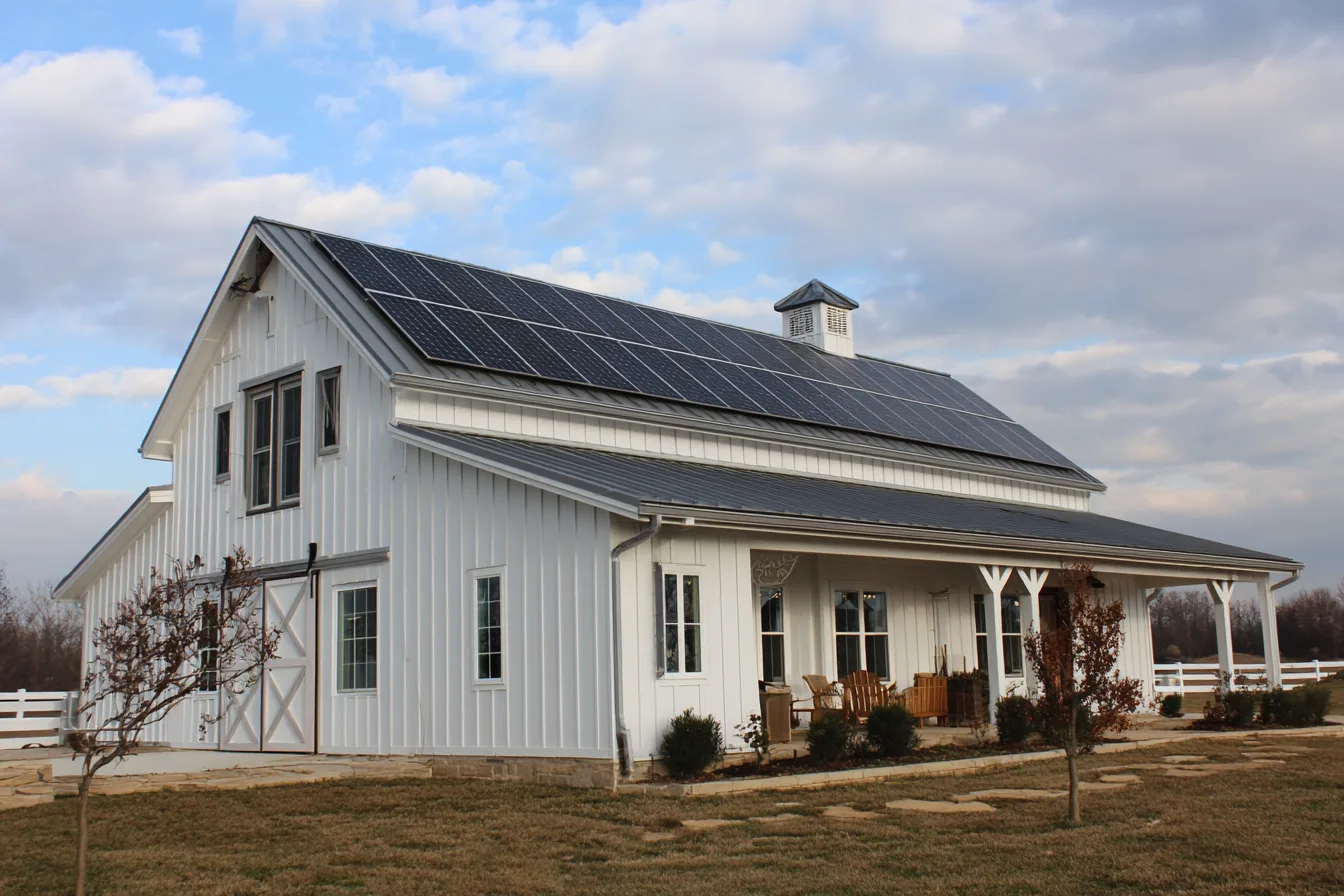






Installing Solar Panels on a Metal Roof Barndominium
Solar panels for barndominiums are becoming one of the smartest upgrades homeowners can make—especially when paired with a metal roof. Barndominiums already offer efficiency, durability, and cost savings. Adding solar takes that to the next level by reducing energy bills and increasing long-term value.
If you’re planning a build or upgrading an existing structure, understanding how solar works with metal roofing systems is essential. This guide walks you through everything—from mounting methods and costs to planning considerations and installation steps.
Why Metal Roofs Are Ideal for Solar Panels
One of the biggest advantages of barndominiums is their metal roofing systems. Unlike asphalt shingles, metal roofs are extremely solar-friendly.
Key Benefits of Metal Roof Solar Installation
- Long lifespan: Metal roofs can last 40–70 years, aligning perfectly with solar panel lifespans
- Easy mounting: Clamp systems attach without drilling into the roof
- Durability: High resistance to wind, weather, and corrosion
- Energy efficiency: Reflective surfaces reduce heat absorption
According to the Solar Energy Industries Association, solar adoption continues to rise nationwide due to improved efficiency and long-term savings.
Types of Solar Mounting Systems for Metal Roofs
Standing Seam Clamp Mounts
This is the most common and preferred option for barndominiums.
- No roof penetration required
- Clamps attach directly to seams
- Fast installation and minimal risk
Exposed Fastener Mount Systems
If your roof uses exposed fasteners, specialized brackets are used.
- Requires sealing at attachment points
- Slightly higher installation complexity
- Still highly effective when installed correctly
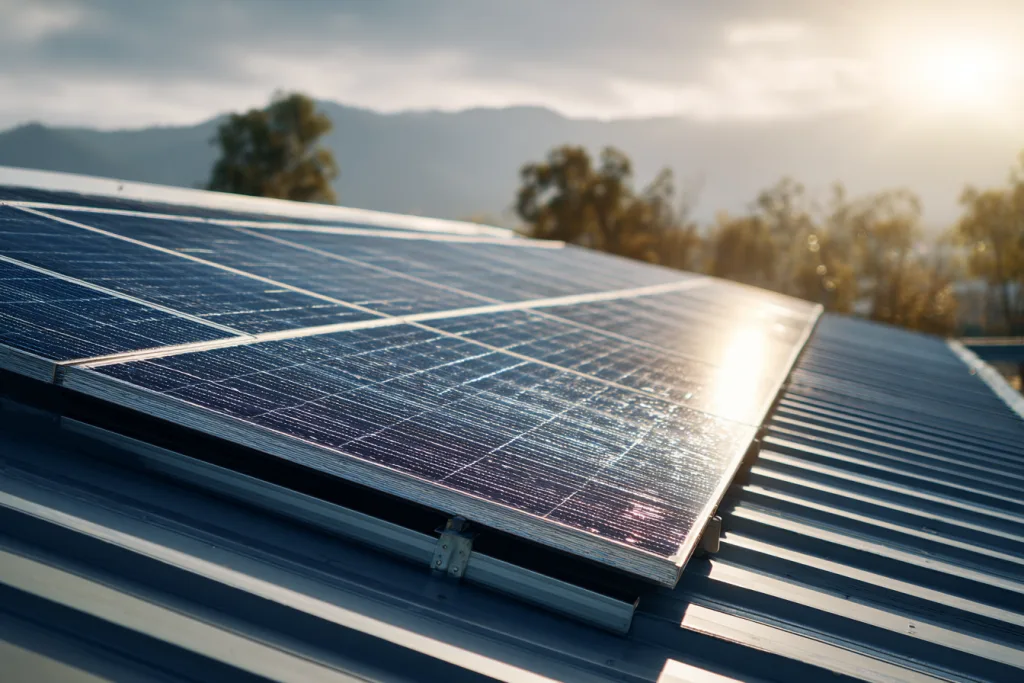
Close-up of solar panel installation on a metal roof, highlighting efficient mounting systems used in barndominiums.
Rail vs. Rail-less Systems
- Rail systems: Stronger and more adjustable
- Rail-less systems: Lower cost and faster install
How Much Do Solar Panels for Barndominiums Cost?
The cost of solar varies based on system size, location, and energy usage.
Typical Cost Breakdown
- Small system (5 kW): $15,000–$20,000
- Medium system (8–10 kW): $20,000–$30,000
- Large system (12+ kW): $30,000–$40,000+
Important incentives:
- Federal solar tax credit (ITC)
- State and local rebates
- Net metering programs
When planning your budget, it’s helpful to also review full pole barn construction and design considerations since roofing and structural setup impact solar readiness.
Step-by-Step: Installing Solar Panels on a Barndominium
1. Evaluate Roof Orientation and Pitch
South-facing roofs produce the most energy, though east/west orientations are still effective.
2. Assess Energy Needs
Review your utility bills or estimate future usage to size your system correctly.
3. Inspect Roof Structure
Ensure your roof framing can handle added weight (most metal roofs easily qualify).
4. Choose Mounting System
Select clamp-based or bracket systems depending on your roof type.
5. Obtain Permits
Check local building codes, zoning laws, and utility requirements.
6. Install Panels and Wiring
Panels are mounted, wired to an inverter, and connected to your electrical system.
7. Inspection and Grid Connection
Final inspections ensure compliance before activation.
Planning Checklist for Solar Installation
- Confirm roof type (standing seam vs exposed fastener)
- Evaluate sun exposure and shading
- Calculate energy usage
- Review local permitting requirements
- Research tax credits and incentives
- Choose a certified solar installer
- Plan for battery storage (optional)
Solar Panels vs Traditional Power: Comparison
Solar Energy Advantages
- Lower long-term energy costs
- Reduced dependence on utilities
- Eco-friendly energy production
- Increased property value
Potential Drawbacks
- High upfront investment
- Weather-dependent production
- Requires proper planning and design
Common Mistakes to Avoid
- Installing without considering roof orientation
- Choosing low-quality mounting hardware
- Skipping professional structural assessment
- Ignoring future expansion needs
- Not verifying local permitting rules
Do Solar Panels Affect Barndominium Construction?
Yes—planning solar early can significantly improve efficiency and reduce costs.
Design Considerations for New Builds
- Optimize roof pitch and orientation
- Pre-install conduit and wiring paths
- Design electrical panels for solar compatibility
- Allow space for inverters and batteries
Key Takeaways
- Metal roofs are ideal for solar panels due to durability and easy installation
- Clamp mounting systems eliminate the need for roof penetration
- Costs typically range from $15,000 to $35,000 depending on system size
- Planning solar during construction saves time and money
- Proper orientation and energy assessment are critical for maximizing efficiency
Frequently Asked Questions
Can you install solar panels on a metal roof barndominium?
Yes, metal roofs are among the best surfaces for solar panel installation because of their strength, longevity, and compatibility with non-penetrating mounts.
What is the lifespan of solar panels on a barndominium?
Most solar panels last 25–30 years, while metal roofs can last even longer, making them an excellent pairing.
Do solar panels increase barndominium value?
Yes, solar systems can increase property value by lowering operating costs and appealing to energy-conscious buyers.
Will solar panels damage a metal roof?
No, when installed correctly using clamp systems, there is no damage or penetration to the roof.
How many panels does a barndominium need?
It depends on energy usage, but most homes need between 15 and 35 panels.
Can you go completely off-grid with a barndominium?
Yes, with adequate solar panels and battery storage, off-grid living is achievable in many regions.
Do I need permits for solar installation?
Yes, most areas require permits and inspections to ensure compliance with building and electrical codes.
What happens during cloudy days?
Solar panels still generate power, though at reduced efficiency. Battery systems or grid connections can fill the gap.
Are solar panels worth it for barndominiums?
In most cases, yes. The energy savings, tax incentives, and sustainability benefits make solar a strong investment.
How long does installation take?
Most residential solar installations are completed within 1–3 days once permits are approved.


What do you think?
It is nice to know your opinion. Leave a comment.