


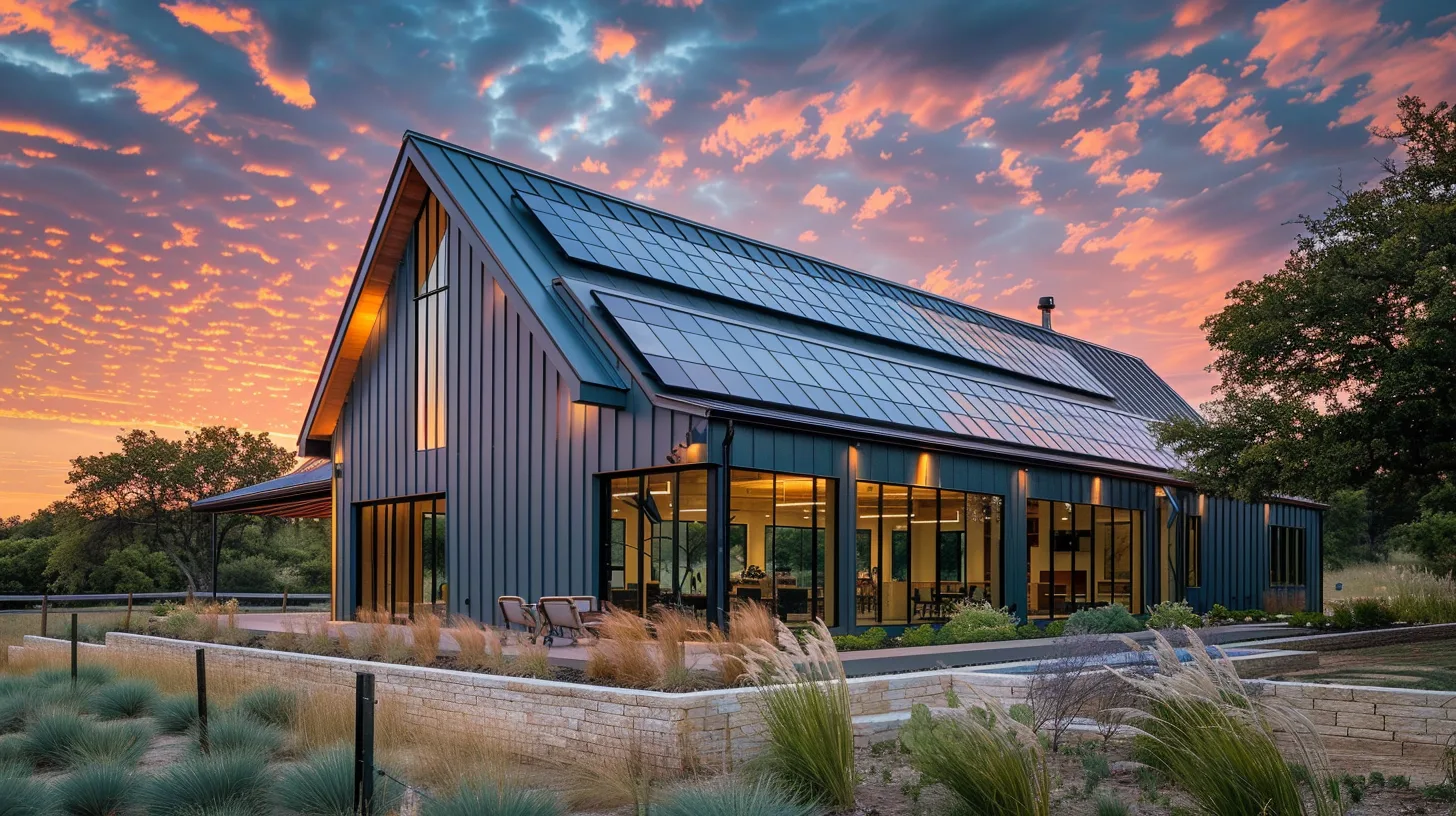






Energy Efficiency Secrets for Steel Barndominiums
Steel barndominiums have exploded in popularity for their durability, design flexibility, and fast build times. But there is one topic that separates an average metal home from a truly high-performing one: barndominium energy efficiency. As experienced barndominium builders, we know that energy performance is not an add-on feature – it has to be engineered in from day one.
Below, we break down the building science, design strategies, and maintenance practices that keep a steel barndo comfortable, quiet, and affordable to operate year-round.
- Energy efficiency must be designed into the steel shell, framing, and slab from the start.
- Layered insulation systems and aggressive air sealing are non‑negotiable for metal structures.
- Right-sized HVAC, smart ventilation, and regular maintenance protect comfort and long‑term performance.
- Thoughtful window placement, shading, and roofing choices can significantly cut cooling loads.
Why Barndominium Energy Efficiency Demands a Different Approach
A barndominium is not just a repurposed barn. Modern designs combine a steel structural shell with residential-grade finishes and systems. If you are new to the concept, start with our overview: what is a barndominium.
Compared to traditional stick-built homes, steel barndos face unique efficiency challenges:
- High conductivity of steel: Metal is an excellent conductor of heat, so any exposed framing can create powerful thermal bridges that bypass insulation.
- Large open volumes: Popular open-concept great rooms and tall ceilings can be harder to condition if not carefully zoned and insulated.
- Condensation potential: Warm interior air contacting cold steel surfaces can lead to moisture issues without proper vapor and air control layers.
The good news: by integrating proven building-science strategies, a barndominium can match – or outperform – many conventional homes on energy use.
Designing the Building Envelope for Maximum Efficiency
The building envelope (roof, walls, slab, doors, and windows) is the first line of defense. Decisions made here will determine most of your long-term utility costs.
1. Smart Orientation and Passive Solar Planning
Before insulation or HVAC is even discussed, we look at the site:
- Orient glazing to capture winter sun on the south side while minimizing unshaded west-facing glass that causes late-day overheating.
- Integrate overhangs and porches to shade windows in summer yet allow low winter sun to penetrate.
- Use natural wind patterns to your advantage with operable windows for cross-ventilation in mild weather.
2. Wall Systems: Stopping Thermal Bridging in Steel Frames
Because metal framing easily conducts heat, we rarely rely on cavity insulation alone. A high-performance barndominium wall stack-up often includes:
- Exterior continuous insulation (rigid foam or rock wool) over the steel structure to break thermal bridges.
- Strategic use of closed-cell spray foam directly on the inside of the metal skin to control condensation and air leakage.
- Conventional cavity fill (blown-in fiberglass or cellulose) in framed interior walls to add R-value and improve acoustics.
This layered approach optimizes cost and performance instead of overspending on one single product.
3. Roofing and Attic Strategies
Roof assemblies in steel barndominiums can be either open (with an attic) or conditioned (insulation at the roof deck). For energy efficiency:
- Use cool metal roofing colors and finishes to reflect solar radiation and reduce cooling loads.
- Meet or exceed local code R-values for roof insulation; you can reference federal efficiency guidance through the U.S. Department of Energy.
- Control airflow: either ventilate a cold attic properly or bring the attic into the conditioned space with spray foam at the roof deck.
4. Slab and Foundation Details
Slab-on-grade foundations are common in barndominiums. To keep comfort up and energy loss down:
- Add rigid foam insulation at the slab edge, where heat loss is greatest.
- Use a high-quality vapor barrier under the slab to limit ground moisture migration.
- Consider radiant floor heating in colder climates for even, efficient comfort.
Insulation and Air Sealing: The Core of Barndominium Efficiency
Insulation R-value is only half the story. In metal buildings, air sealing and moisture control are just as critical.
Recommended Insulation Strategy
Every project is unique, but a robust baseline approach includes:
- Closed-cell spray foam (1–2 inches) against the metal skin to serve as an air barrier, vapor retarder, and thermal break.
- Additional cavity insulation (fiberglass or cellulose) to reach targeted R-values cost-effectively.
- Continuous exterior insulation where architectural details and budget allow, especially in colder climates.
Air Sealing Priorities
Key locations that demand meticulous air sealing include:
- Penetrations for plumbing, electrical, and HVAC.
- Window and door perimeters.
- Transitions between wall and roof assemblies.
- Slab-to-wall junctions.
Our teams use sealants, gaskets, and tapes designed to work with metal building systems, reducing infiltration that drives up both heating and cooling costs.
High-Performance Windows, Doors, and Shading
Open-concept barndos often feature dramatic glazing. To balance aesthetics and efficiency:
- Choose ENERGY STAR–rated windows appropriate to your climate zone, with low U-factors and climate-tuned solar heat gain coefficients.
- Use insulated, weatherstripped exterior doors to reduce drafts.
- Integrate fixed overhangs, awnings, and porches to shade south and west windows.
- Consider interior and exterior shading (blinds, shades, shutters) to fine-tune comfort.
HVAC, Ventilation, and Indoor Air Quality
A tight, well-insulated barndominium requires a properly engineered mechanical system to maintain comfort and air quality.
Right-Sizing the HVAC System
Oversized equipment short cycles, wastes energy, and can cause humidity problems. We perform room-by-room load calculations instead of rule-of-thumb sizing to select:
- High-efficiency heat pumps or furnaces (check current efficiency standards at the Department of Energy).
- Properly zoned ducted systems or ductless mini-splits for large open areas and lofts.
- Smart thermostats to moderate peak loads and support off-peak usage.
Controlled Ventilation
A tight shell means you need deliberate fresh air. Strategies include:
- Energy Recovery Ventilators (ERVs) or Heat Recovery Ventilators (HRVs) for balanced fresh air with minimal energy penalty.
- Spot ventilation in kitchens, baths, and laundry rooms with correctly ducted exhausts.
Maintenance Habits That Preserve Energy Efficiency
Even the best-built barndominium will lose performance without basic maintenance. A simple annual routine keeps your utility bills low and comfort high.
Annual Energy-Efficiency Checklist
- Inspect and seal: Check caulking and weatherstripping around windows, doors, and penetrations; repair gaps or cracks.
- Roof and shell inspection: Look for damaged panels, failing fasteners, or compromised sealants that could invite air or moisture.
- HVAC tune-up: Replace filters, clean coils, and have a professional verify refrigerant charge and airflow.
- Check insulation coverage: Especially in attics or roof-deck assemblies, verify that insulation is undisturbed and dry.
- Test ventilation: Confirm that bath and kitchen fans exhaust properly to the exterior and that any ERV/HRV is operating as intended.
Behavioral Tweaks That Add Up
- Use programmable or smart thermostats to match occupancy patterns.
- Run ceiling fans to improve comfort, allowing higher summer setpoints.
- Leverage natural daylighting and switch to LED fixtures.
- Select ENERGY STAR appliances and electronics when replacing equipment.
Planning Your High-Efficiency Barndominium Build
Effective barndominium energy efficiency is the result of aligned decisions across design, materials, and mechanical systems. Partnering with a builder who understands steel structures, local codes, and current building-science standards is crucial.
At Barndo Builders, we integrate efficiency into every phase – from initial concept and floor plan to shell engineering, insulation details, and HVAC selection. If you are considering a new build, explore more of our resources on our main site at barndobuilders.net to see how we design for long-term performance, not just move-in day aesthetics.
With the right strategy, your steel barndominium can deliver the low-maintenance lifestyle you want while keeping monthly energy costs firmly under control for decades.


What do you think?
It is nice to know your opinion. Leave a comment.