






Post Frame Construction Explained: The Complete Guide for Pole Barns and Barndominiums
Post frame construction is one of the most efficient and cost-effective building methods used today—especially for pole barns and barndominiums. If you’ve been researching alternative building styles, you’ve likely come across this term and wondered how it works and why it’s so popular.
This guide breaks it down clearly—what post frame construction is, how it differs from traditional methods, and why it has become a top choice for modern builds.
What Is Post Frame Construction?
Post frame construction is a structural building system that uses large vertical posts or columns as the primary support system. These posts are either embedded directly into the ground or mounted on concrete piers, eliminating the need for continuous foundations.
Instead of relying on load-bearing walls like traditional construction, the weight of the structure is transferred through these posts into the ground.
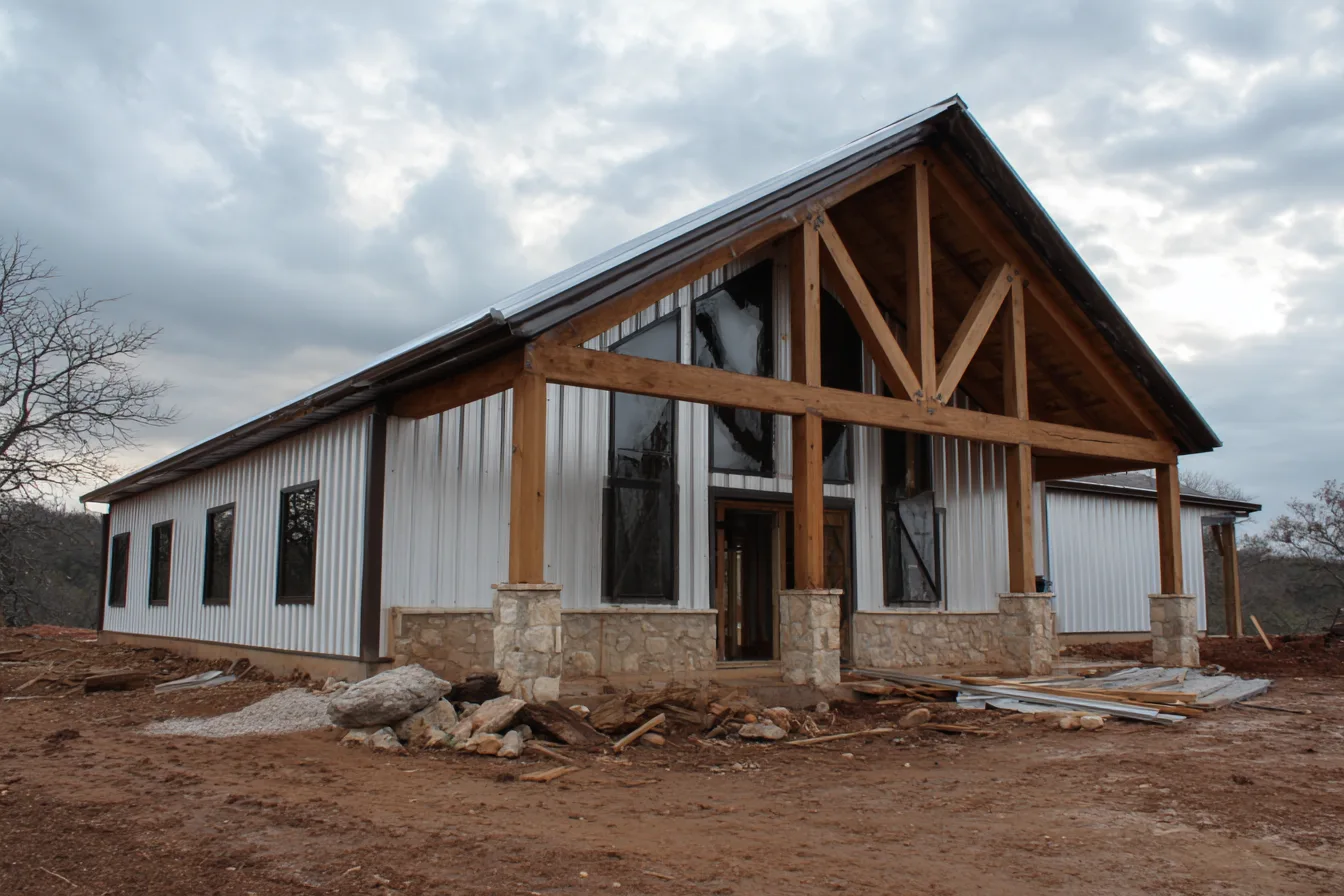
large post frame barndominium shell under construction with metal exterior panels
Core Components of a Post Frame Building
• Pressure-treated wood posts or laminated columns
• Horizontal girts (wall supports)
• Roof trusses spanning wide distances
• Metal or wood siding
• Concrete slab (optional but common)
This system creates large, open interior spaces without internal load-bearing walls.
For a deeper look at how these structures are used in residential builds, see what a barndominium is.
How Post Frame Construction Works
The process is straightforward and significantly faster than conventional construction.
Step-by-Step Building Process
1. Site preparation and grading
2. Post placement (embedded or anchored to piers)
3. Installation of horizontal framing (girts and purlins)
4. Roof truss installation
5. Roof and wall sheathing or metal panels
6. Concrete slab pouring (if included)
7. Insulation and interior finishing
Because fewer materials and steps are involved, projects often complete weeks faster than traditional builds.
According to the National Frame Building Association, post frame construction is engineered for both durability and efficiency in residential and agricultural applications.
Post Frame vs Traditional Construction
Understanding the differences helps you decide which method fits your needs.
Key Differences
• Foundation
– Post Frame: Embedded posts or piers
– Traditional: Continuous concrete strip or slab foundation
• Structural Support
– Post Frame: Vertical posts carry load
– Traditional: Load-bearing walls distribute weight
• Construction Speed
– Post Frame: Faster build time
– Traditional: Slower, more labor-intensive
• Interior Layout
– Post Frame: Wide open spaces
– Traditional: More structural limitations
• Cost
– Post Frame: Typically lower
– Traditional: Higher materials and labor costs
For cost comparisons, explore barndominium pricing breakdowns.
Advantages of Post Frame Construction
Post frame buildings offer several compelling benefits that make them ideal for both residential and agricultural use.
1. Lower Construction Costs
Because there is no need for a full foundation and fewer structural materials are required, overall costs are reduced.
2. Faster Build Times
Fewer steps and simplified framing allow projects to move quickly from start to finish.
3. Design Flexibility
The absence of load-bearing interior walls allows:
• Open-concept layouts
• Large garages or workshops
• Flexible room configurations
4. Energy Efficiency
Deep wall cavities allow for better insulation, improving thermal performance. The U.S. Department of Energy highlights the importance of proper insulation in reducing long-term energy costs.
5. Strong Structural Performance
Post frame buildings are engineered to withstand:
• High wind loads
• Heavy snow loads
• Seismic activity (with proper design)
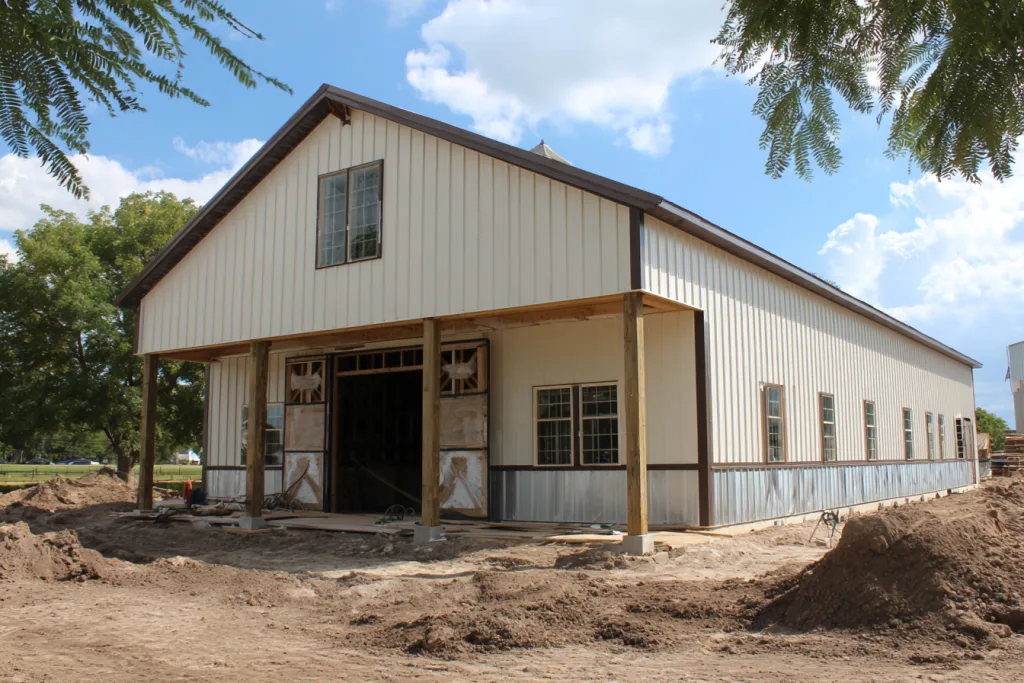
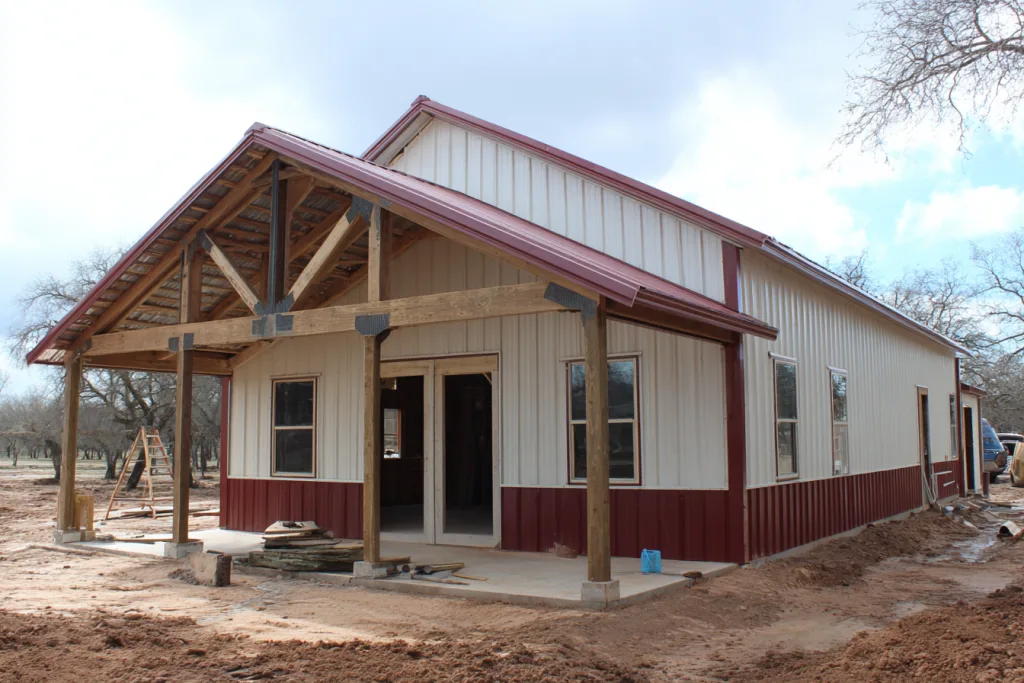
This image shows a residential-style post frame barndominium under construction, featuring a covered front porch, metal siding, and a practical home-ready layout. It helps demonstrate how post frame construction is not just for agricultural or utility buildings, but also a popular option for custom homes and modern barndominiums.
Common Uses of Post Frame Construction
Post frame is incredibly versatile and is used across many project types.
Residential Applications
• Barndominiums
• Custom homes
• Garage homes
Explore layout ideas in barndominium floor plans.
Agricultural and Utility Uses
• Pole barns
• Equipment storage
• Livestock shelters
Commercial Applications
• Workshops
• Retail spaces
• Warehouses
Potential Drawbacks to Consider
While post frame construction offers many advantages, it’s important to understand its limitations.
Common Considerations
• Financing can be more complex (some lenders are unfamiliar)
• Local permitting requirements may vary
• Moisture protection must be handled properly
• Material quality heavily impacts lifespan
These challenges are manageable with proper planning and experienced builders.
Post Frame Construction Checklist
Before starting your project, use this checklist to stay on track:
• Confirm zoning and building codes
• Choose between embedded posts or concrete piers
• Select high-quality, treated materials
• Design layout for future flexibility
• Plan insulation and energy efficiency strategy
• Secure financing or budget
• Work with experienced post frame builders
Cost Overview of Post Frame Buildings
While costs vary based on size, location, and finishes, post frame construction is generally more affordable than traditional building methods.
Average Cost Ranges
• Basic pole barns: $15–$35 per square foot
• Finished barndominiums: $70–$150+ per square foot
Factors affecting cost include:
• Size and complexity
• Interior finishes
• Insulation and HVAC systems
• Site preparation
For a deeper breakdown, visit how much a barndominium costs.
Key Takeaways
• Post frame construction uses vertical posts instead of load-bearing walls
• It’s faster and typically more affordable than traditional building
• Ideal for barndominiums, pole barns, and large open spaces
• Offers excellent design flexibility and energy efficiency
• Requires proper planning for financing, insulation, and moisture control
Frequently Asked Questions
What is post frame construction?
Post frame construction is a method where large vertical posts support the structure, eliminating the need for traditional foundations and load-bearing walls.
Is post frame the same as pole barn construction?
Yes, the terms are used interchangeably. Pole barns are a common type of post frame building.
How long do post frame buildings last?
With proper materials and maintenance, they can last 40–60 years or more.
Are post frame homes energy efficient?
Yes, they allow for thicker insulation, which can significantly improve energy savings.
Is post frame construction cheaper than traditional construction?
In most cases, yes. Reduced foundation requirements and faster builds lower overall costs.
Do post frame buildings require a foundation?
They don’t require a continuous foundation. Posts are embedded in the ground or anchored to piers.
Can you build a permanent home with post frame construction?
Yes. Many modern barndominiums are permanent residences built using post frame methods.
Are post frame buildings strong?
Yes. When engineered correctly, they can withstand severe weather conditions and heavy loads.


What do you think?
It is nice to know your opinion. Leave a comment.