





Best Open Concept Barndominium Layouts
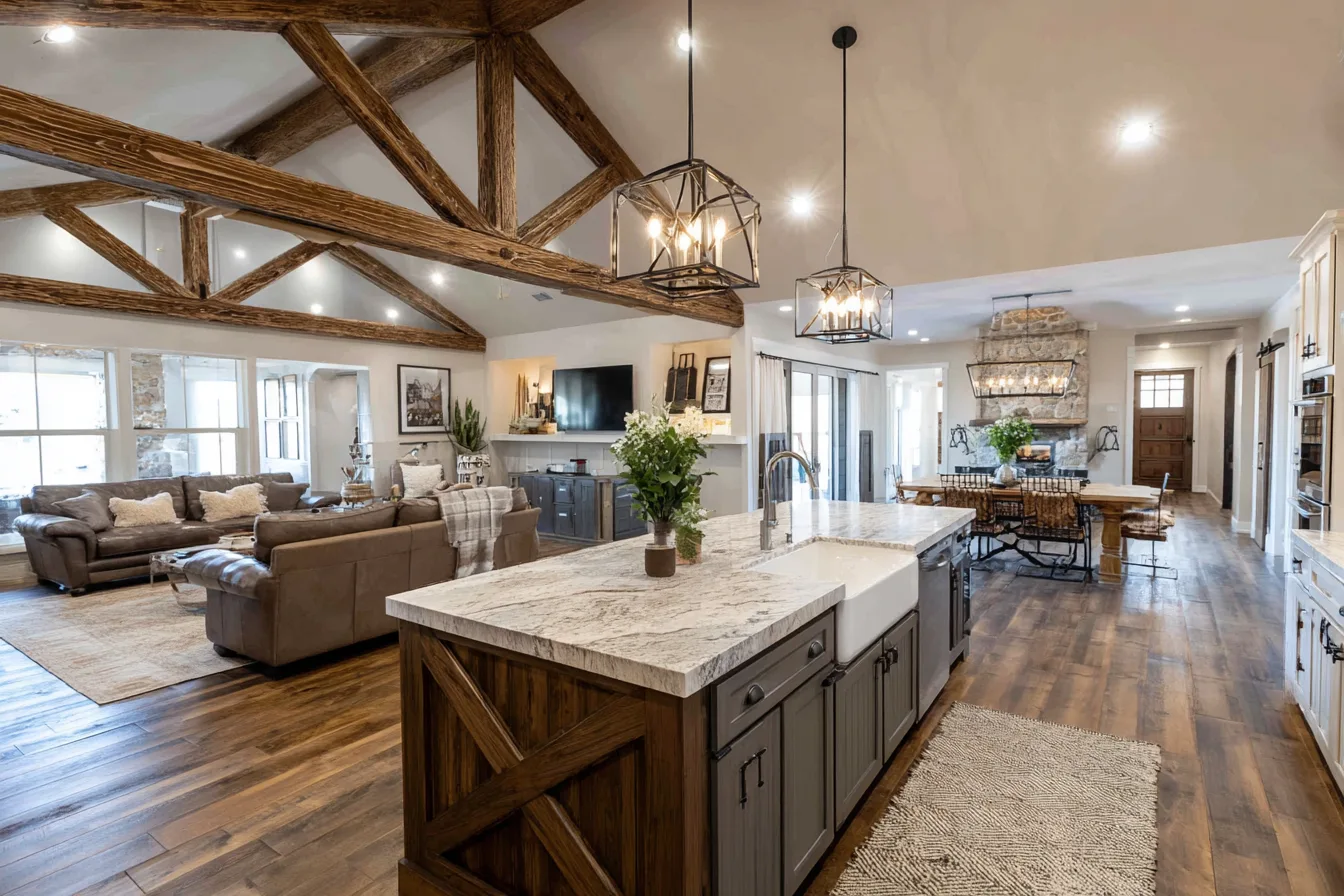
A barndominium open floor plan is one of the most sought-after design features for modern barndo living—and for good reason. It delivers spaciousness, flexibility, natural light, and a highly functional layout that fits both rural and suburban lifestyles.
Whether you’re building from scratch or refining your floor plan, understanding how open-concept layouts work—and how to optimize them—can make a huge difference in comfort, usability, and long-term value.
What Is a Barndominium Open Floor Plan?
An open floor plan removes traditional interior walls between key living spaces, typically combining:
- Kitchen
- Dining area
- Living room
Instead of separated rooms, these areas flow into one another, creating a central gathering space.
This design is especially effective in barndominiums because the steel or post-frame structure allows for large, unobstructed spans. Learn more about structural flexibility in barndominium floor plans.
Benefits of Open Concept Barndominium Layouts
- Maximized space: No wasted square footage on hallways or walls
- Better natural lighting: Light flows throughout the entire space
- Improved social interaction: Ideal for families and entertaining
- Flexible furniture layouts: Easily reconfigure spaces over time
- Cost efficiency: Reduced framing and labor costs
According to the U.S. Department of Energy, open layouts also allow more efficient distribution of heating and cooling if designed properly (energy.gov).
Best Open Concept Barndominium Layout Ideas
1. Great Room-Centered Layout
The most popular layout features a large “great room” at the center, combining all primary living spaces.
- Kitchen with island facing living area
- Dining space adjacent to kitchen
- Vaulted ceiling for vertical openness
This layout works especially well for mid-sized homes (1,500–2,500 sq ft).
2. L-Shaped Open Layout
This layout subtly separates functions without walls.
- Kitchen and dining on one leg
- Living room on the other
- Natural corner division creates flow
Great for homeowners who want openness with slight structure.
3. Split Bedroom Open Layout
Combines open living areas with private bedroom wings.
- Master suite on one side
- Guest rooms on the opposite side
- Shared open space in the center
This is ideal for privacy and functionality in family homes.
4. Loft-Overlook Layout
Perfect for two-story barndominiums.
- Open living space below
- Loft overlooking main area
- Great for offices or guest quarters
Explore multi-level ideas in two-story barndominium designs.
5. Shop-House Hybrid Layout
Combines residential living with a workshop or garage space.
- Open living area in front or center
- Shop area attached or behind
- Shared wall reduces construction cost
This layout is highly popular for rural and hobby-focused homeowners.
Key Design Elements for Open Barndominium Layouts
Zoning Without Walls
Use design techniques instead of barriers:
- Kitchen islands
- Area rugs
- Furniture placement
- Ceiling changes
Ceiling Height Variations
Vaulted ceilings in living areas make spaces feel larger, while slightly lower ceilings in kitchens create intimacy.
Lighting Strategy
Layered lighting is essential:
- Recessed lighting for general illumination
- Pendant lights over islands
- Accent lighting for visual interest
Acoustic Considerations
Open layouts can echo. Mitigate noise with:
- Soft furnishings
- Acoustic panels
- Textured surfaces
Open Floor Plan vs Traditional Layout
- Open Plan Pros: Spacious, modern, flexible, great for entertaining
- Open Plan Cons: Less privacy, noise spread, harder zoning
- Traditional Pros: Defined rooms, quieter spaces
- Traditional Cons: Less natural light, more materials needed
The National Association of Home Builders highlights that open layouts remain one of the top buyer preferences (nahb.org).
Step-by-Step: Planning Your Open Floor Plan
- Define your lifestyle needs (entertaining, family size, work-from-home)
- Determine square footage and structural layout
- Map core zones (kitchen, living, dining)
- Add private areas (bedrooms, bathrooms)
- Plan traffic flow to avoid congestion
- Incorporate natural light sources
- Choose finishing elements that define zones
If you’re just starting, check out how to build a barndominium for a full process overview.
Common Mistakes to Avoid
- Oversizing the open space without purpose
- Ignoring storage solutions
- Poor lighting design
- Not planning HVAC distribution properly
- Lack of visual separation between zones
Practical Open Floor Plan Checklist
- Clear functional zones identified
- Kitchen positioned for visibility and flow
- Adequate lighting layers included
- Sound control measures planned
- Furniture layout pre-planned
- Natural light maximized
- Future flexibility considered
Key Takeaways
- Barndominium open floor plans maximize space and flexibility
- Great layouts balance openness with functional zoning
- Structural advantages make barndos ideal for open concepts
- Smart design choices improve comfort, lighting, and acoustics
- Careful planning prevents common layout mistakes
Frequently Asked Questions
What is a barndominium open floor plan?
It is a layout that combines kitchen, living, and dining areas into one continuous, open space without interior walls.
Are open floor plans cheaper to build?
Yes, they often reduce framing and labor costs while simplifying construction.
Do open floor plans affect resale value?
Generally, open layouts are highly desirable and can improve resale appeal.
How do you create privacy in an open layout?
Use furniture placement, partitions, or strategic room positioning for private areas.
Can open floor plans work in small barndominiums?
Yes, they can make smaller homes feel larger and more functional.
What flooring works best in open layouts?
Consistent flooring like polished concrete or luxury vinyl helps unify the space.
How do you heat and cool open spaces efficiently?
Use zoned HVAC systems and ceiling fans to maintain consistent airflow.
Can I modify an open plan later?
Yes, barndominiums make it relatively easy to add walls or partitions later.
Is an open kitchen always part of the design?
Most open layouts include a kitchen, but it can be partially separated with islands or peninsulas.
What size is best for an open floor plan?
Layouts between 1,200 and 3,000 square feet offer the best balance of openness and functionality.


What do you think?
It is nice to know your opinion. Leave a comment.