


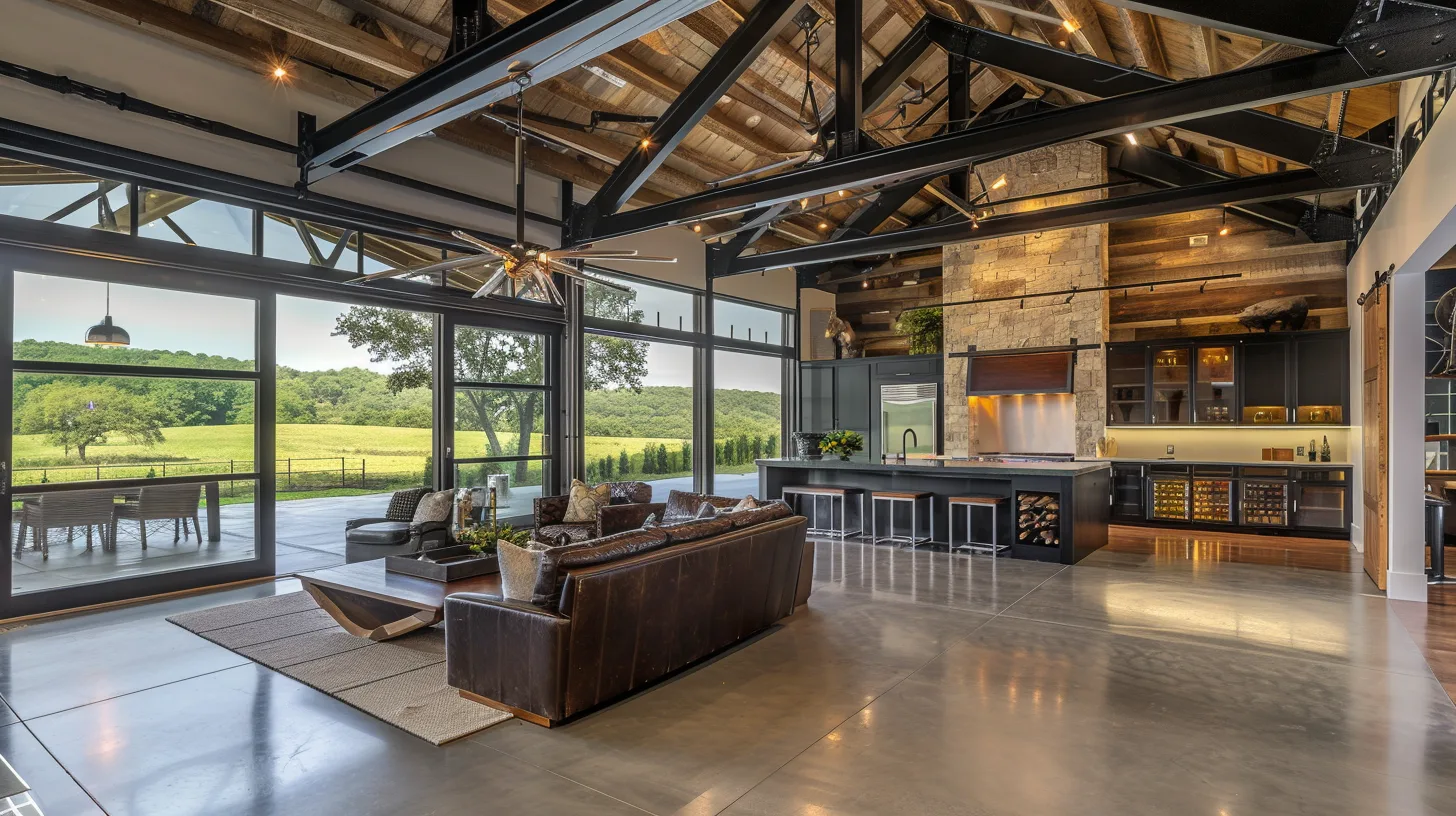






Farmhouse Industrial: The Ultimate Barndominium Decor Guide
Key Takeaways
- Farmhouse industrial barndominium interior decor balances rustic warmth with exposed metal, concrete, and clean-lined fixtures.
- Plan decor alongside your structural design so beams, columns, and spans become intentional features, not obstacles.
- Limit your palette to 3–4 core materials repeated throughout to keep open interiors cohesive and high-end.
- Lighting layers, scaled furniture, and ceiling details are crucial to make large volumes feel human, cozy, and functional.
Farmhouse industrial is the natural evolution of barndominium interior decor. Your steel or post-frame shell already delivers open spans, tall ceilings, and exposed structure. The right decor strategy turns that efficient envelope into a magazine-worthy home that’s warm, functional, and durable enough for true country living.
As barndominium builders, we see the same pattern: projects with the strongest interiors are the ones where decor, layout, and structure are designed as one system—not as afterthoughts. This guide walks you through how to achieve a cohesive farmhouse industrial look from floor to ceiling.
Start with Structure: Designing Decor Around the Barndo Shell
Barndominiums are defined by their structural efficiency: wide clear spans, minimal interior load-bearing walls, and visible steel or engineered wood. Instead of hiding those traits, farmhouse industrial decor celebrates them.
1. Embrace Exposed Elements
- Beams and trusses: Stain engineered wood or wrap steel beams with wood cladding. Tie beam color to your flooring for continuity.
- Posts and columns: Box them in with reclaimed boards or smooth pine, then finish with black steel brackets or straps.
- Ceiling systems: Use painted metal liner panels for a clean industrial edge, or combine drywall fields with wood beams for farmhouse warmth.
Professional interior designers increasingly treat structure as an aesthetic tool, especially in open-volume spaces. Resources like Interior Design highlight this shift toward honest materials and exposed systems in contemporary residential design.
2. Plan Decor with Your Floor Plan
Before choosing paint colors, lock in your layout. Open barndominium shells tempt owners to “figure it out later,” but that leads to awkward furniture placement and expensive changes.
- Start with barndominium plans & designs that support your lifestyle: work-from-home, entertaining, multigenerational living, or hobby spaces.
- Overlay furniture zones: living, dining, kitchen, entry, mudroom, and flex spaces.
- Align windows, beams, and lighting rough-ins with those furniture zones so decor feels intentional.
When structure and furniture planning are in sync, decor upgrades (like built-ins, accent walls, or oversized pendants) land in the right place the first time.
Core Palette: Materials that Define Farmhouse Industrial
Farmhouse industrial is less about trending colors and more about a disciplined mix of texture and tone. A typical palette includes:
- Warm wood (oak, hickory, pine, or stained plywood)
- Black or dark metal (hardware, railings, lighting)
- Soft whites and greiges (walls, trim, ceilings)
- Concrete or stone (floors, fireplace, counters, or accent walls)
Floors: The Foundation of the Look
For durability and style, we typically recommend:
- Sealed concrete in entries, mudrooms, and high-traffic zones
- Luxury vinyl plank (LVP) in living areas for warmth and resilience
- Tile with stone or concrete look in bathrooms and laundry
Tinting and polishing your slab can deliver a refined industrial baseline while saving on additional flooring costs. Then warm it up with layered rugs in natural fibers.
Walls and Ceilings: Rustic Meets Refined
- Main walls: Use matte or eggshell paint in warm white or soft greige for light bounce and flexibility.
- Accent walls: Shiplap, vertical nickel-gap boards, or stained plywood bring farmhouse texture without feeling busy.
- Ceilings: In tall barndos, darker or wood-toned ceilings can visually lower the volume and make spaces feel cozier.
In spray-foam-insulated barndos, interior furring and drywall are typical; plan your decorating strategy (panel layouts, trim, color blocking) before rough-in to ensure proper backing and smooth transitions.
Room-by-Room Barndominium Interior Decor Ideas
Kitchen: The Workhorse Showpiece
The kitchen usually anchors the farmhouse industrial interior. Balance commercial function with inviting finishes:
- Cabinets: Flat-panel or simple Shaker fronts in white, greige, or stained wood. Mix one color on the perimeter with a contrasting island.
- Countertops: Quartz, concrete-look quartz, or butcher block. Waterfall islands pair beautifully with exposed beams above.
- Backsplashes: Classic subway tile, large-format porcelain, or full-height slab for a clean industrial vibe.
- Hardware: Black or brushed steel pulls in simple, linear profiles.
Use oversized, black-framed pendants or linear fixtures above the island to visually connect the kitchen with adjacent living areas.
Living Room: Scaling the Volume
Large, open living rooms can feel like barns—in the wrong way—if decor isn’t scaled properly. To keep it comfortable:
- Choose oversized, deep sofas and sectionals instead of many small pieces.
- Anchor the space with a large area rug that fits all front legs of seating.
- Add a focal wall: fireplace with stone or concrete surround, media built-in, or a floor-to-ceiling wood feature.
- Layer ambient, task, and accent lighting (ceiling cans, sconces, lamps) for flexibility.
Exposed ductwork, black stair railings, and metal-framed lofts can pull in the industrial flavor without sacrificing comfort.
Bedrooms: Softening the Industrial Edge
Private spaces should dial up the farmhouse warmth:
- Use textile-heavy decor: upholstered headboards, linen bedding, and thick drapes.
- Introduce warmer woods and softer lighting (sconces, shaded lamps) in place of high-output cans.
- In primary suites, consider a wood feature wall behind the bed or subtle board-and-batten for depth.
Bathrooms: Utility with Style
- Tile: Stone, terrazzo, or concrete-look porcelain on floors and shower walls.
- Vanities: Wood or painted slab fronts paired with black fixtures.
- Lighting: Industrial sconces with warm bulbs to balance cool tile tones.
In barndominiums with slab-on-grade construction, plan for linear drains and curbless showers early; they complement the industrial aesthetic and improve accessibility.
Lighting & Electrical: Industrial Performance, Farmhouse Warmth
Lighting is where farmhouse industrial truly comes alive. Aim for three layers:
- Ambient: Recessed cans, linear fixtures, or large pendants for overall light.
- Task: Under-cabinet lights, reading lamps, vanity sconces.
- Accent: Wall washers, picture lights, and toe-kick lighting for drama.
In tall barndominiums, large statement fixtures (wagon-wheel chandeliers, black iron clusters) help visually lower the ceiling and define zones. Coordinate fixture finishes with door hardware and plumbing for a unified feel.
Storage, Mudrooms, and Utility Spaces
True farmhouse living requires serious storage. Integrate functional decor in:
- Mudrooms with built-in cubbies, benches, and hooks—finished in wood and black hardware.
- Pantries with open shelving, labeled bins, and transom windows for natural light.
- Laundry rooms that double as pet-wash stations or hobby areas.
These spaces maintain the farmhouse industrial language with simple slab doors, durable counters, and hard-wearing floors, but they’re designed for everyday mess and workflow.
Planning Your Farmhouse Industrial Barndominium Interior
To bring your barndominium interior decor vision to life, work in this order:
- Select your plan: Choose a structural layout that supports your furniture and lifestyle goals using curated barndominium plans and designs.
- Define a tight material palette: 3–4 main finishes you’ll repeat throughout.
- Coordinate structure and decor: Beams, columns, windows, stairs, and lofts should complement your interior concept.
- Lock in lighting and electrical once furniture zones are sketched.
- Layer in furnishings and textiles last to balance industrial edges with farmhouse comfort.
Barndominium interiors succeed when every decision—structural, mechanical, and decorative—serves the same vision. With a clear farmhouse industrial direction and an integrated design process, your barndo can feel both authentically rural and architecturally modern for decades to come.
For more technical insight on barndo exteriors, shells, and building methods, explore our other resources on Barndo Builders to make sure your decor plan aligns with the way your home is engineered and built.


What do you think?
It is nice to know your opinion. Leave a comment.