


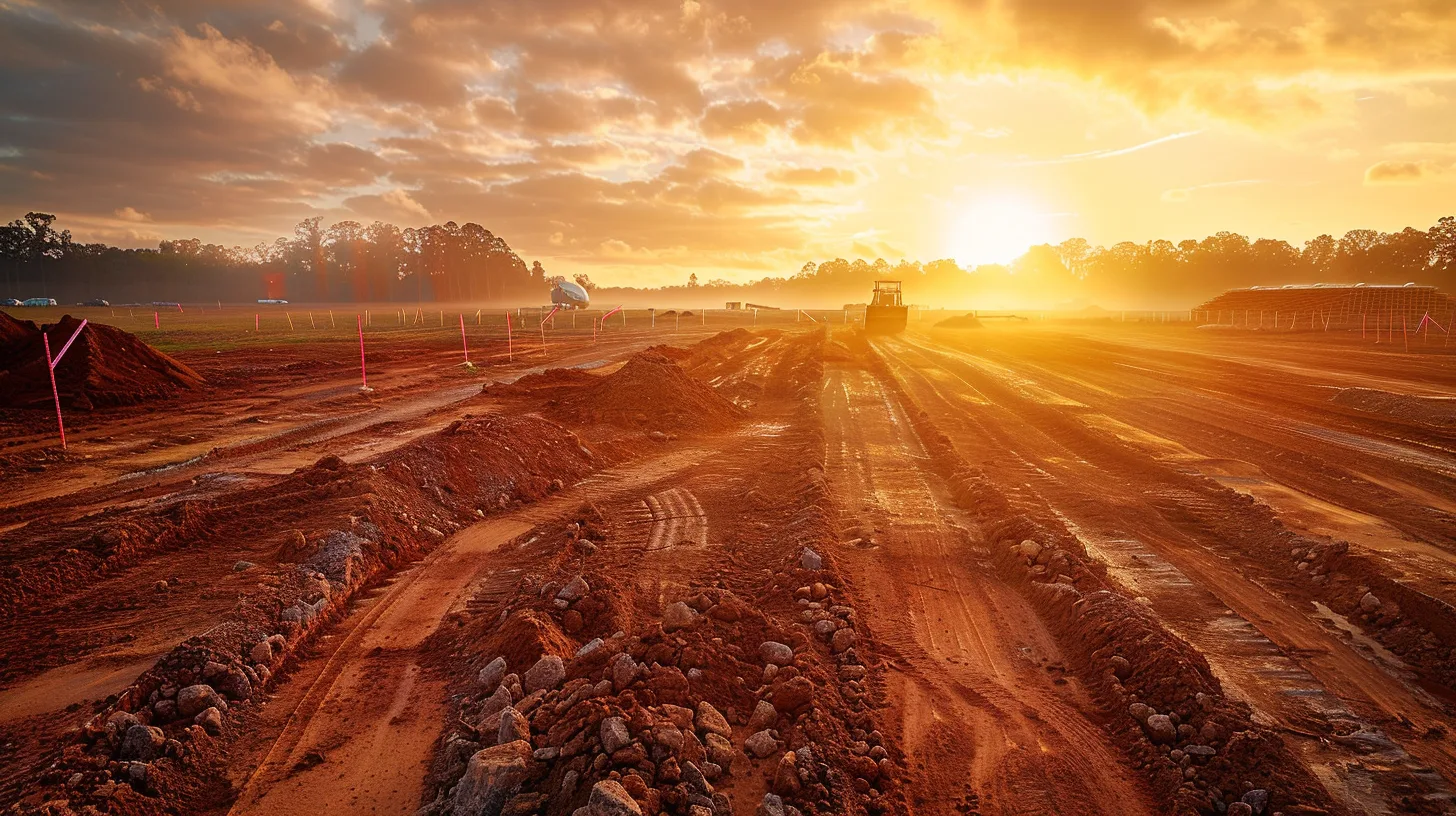






Preparing Your Land for a Barndominium Foundation: Complete Site Prep Guide
Barndominium site prep is the hidden structural system under your home. Long before steel framing goes up or your slab is poured, the quality of your land preparation determines whether your barndo stays level, dry, and crack‑free for decades. As barndominium builders, we treat site prep with the same rigor as structural design and foundation engineering.
- Proper barndominium site prep starts with surveying, soil testing, and drainage planning.
- Compaction and grading tolerances are as important as concrete strength.
- Utilities, access, and erosion control should be coordinated before the foundation crew arrives.
- Partnering with experienced barndo and pole barns construction design professionals reduces costly rework.
Step 1: Evaluate and Plan Your Barndominium Site
Survey, setbacks, and building envelope
Before any earth is moved, a licensed surveyor should locate property lines, easements, and required setbacks. This defines your buildable envelope and prevents foundation encroachment issues. Precise survey control also keeps your slab or post layout square and aligned with driveways, future shops, and outbuildings.
Soil testing and bearing capacity
A geotechnical (soil) investigation is essential for serious barndominium site prep. The report typically includes:
- Soil classification (clays, silts, sands, gravels)
- Allowable bearing capacity for your foundation design
- Moisture content and shrink/swell potential
- Recommended over‑excavation and compacted fill depth, if needed
Expansive clays or organic topsoils almost always require removal and replacement with engineered fill. Skipping this step is how you get cracked slabs, heaving, and doors that don’t close within a few seasons.
Step 2: Clearing, Grubbing, and Rough Grading
Remove vegetation and unsuitable material
The pad area plus at least 10–15 feet beyond the footprint should be fully cleared. That includes:
- Trees, stumps, and major roots
- Brush and organic topsoil (dark, loamy material)
- Old fill piles, trash pits, or buried debris
Organic material continues to decompose and settle; it cannot be relied on as structural support under a barndominium foundation.
Rough grading for building performance
Once cleared, the site is rough‑graded to establish overall slope and drainage. As a rule of thumb, you want at least 5% fall (about 6 inches per 10 feet) away from the barndominium for the first several feet, then 2% minimum beyond that. This keeps roof runoff and surface water from standing along your walls.
For rural projects, it’s smart to align rough grading with broader land‑use plans, including driveways, future barns, or livestock areas. Agencies such as the USDA provide soil and watershed data that can help you understand how water naturally moves across your property.
Step 3: Building Pad Construction and Compaction
Importing and placing structural fill
Where native soils are soft or below design elevation, we build a structural pad using granular fill (often select sand or gravel mixes) placed in controlled lifts. Typical best practices include:
- Lift thickness of 6–8 inches before compaction
- Moisture conditioning of each lift to optimal levels
- Compaction to 95% of the maximum dry density (per Proctor tests) unless your engineer specifies otherwise
Compaction testing and tolerances
For a barndominium, especially a large clear‑span structure, uniform support matters as much as strength. A third‑party testing lab may perform nuclear density tests at multiple locations across the pad to verify target compaction. Variations in density can cause differential settlement and uneven floors.
Pad size, elevation, and slopes
We typically extend the pad a minimum of 5 feet beyond the slab or post line in all directions. Pad elevation should sit above surrounding grade to keep water shedding away from the building. For flood‑prone or low‑lying sites, this may mean building up the pad significantly to meet local codes and insurance requirements.
Step 4: Drainage, Moisture, and Frost Considerations
Surface and subsurface drainage
A well‑designed barndominium site integrates multiple drainage strategies:
- Grading that slopes away from the structure
- Swales or shallow ditches that intercept runoff and redirect it
- Optional French drains or perimeter drains for high‑water‑table sites
- Downspout extensions or underground drain lines
Frost depth and heave
In cold climates, your site prep must account for local frost depth so that footings, piers, or posts extend below the frost line. Failing to respect frost depth requirements leads to frost heave, cracked slabs, and racked frames. Local building departments usually adopt frost depth data derived from national climate studies and engineering standards.
Step 5: Utilities, Access, and Construction Logistics
Plan utility runs before final pad grading
Utility coordination is an often‑overlooked component of barndominium site prep. Ideally, you:
- Confirm water, power, and sewer/septic locations with each provider.
- Trench and install sleeves or conduit paths before final pad grading.
- Backfill and compact trenches to avoid soft spots under slabs or driveways.
Trenching after the pad is finished risks cutting into compacted fill and undermining the slab edge or post line.
Construction access and staging
Heavy concrete trucks, steel deliveries, and erection equipment require stable access. We typically:
- Grade a temporary or permanent construction drive
- Install geotextile fabric and base rock in soft areas
- Provide staging zones for steel, trim, and panels clear of the pad
Good logistics planning prevents rutting, stuck equipment, and damage to your newly prepared pad.
Step 6: Final Prep for Slab or Post‑Frame Foundations
Slab‑on‑grade barndominiums
For slab‑on‑grade foundations, final prep often includes:
- Laser‑grading the pad to within tight tolerances (often ±0.10 ft)
- Placing and compacting a granular base layer (e.g., 4" of washed rock)
- Installing vapor barriers, insulation, and edge forms
- Locating plumbing stub‑outs and conduits before pour
The objective is a flat, uniform substrate that allows the slab to behave as a single structural element without stress concentrations.
Post‑frame and hybrid foundations
Many barndominiums borrow from proven pole barns construction design methods. For post‑frame or hybrid foundations, we:
- Lay out post locations using the survey grid and building plans
- Excavate piers to engineered depth and diameter
- Backfill with concrete, compacted gravel, or engineered backfill as specified
- Check plumb, alignment, and elevations prior to framing
Even with post‑frame systems, a level, well‑drained pad around and between posts improves long‑term performance and usability of interior floors.
Step 7: Erosion Control and Code Compliance
Erosion and sediment controls
Many jurisdictions require a basic stormwater pollution prevention plan (SWPPP) and installation of erosion controls such as silt fence, stabilized construction entrances, and inlet protection. These measures keep sediment on‑site and protect neighboring properties and waterways.
Permits, inspections, and documentation
Depending on your area, inspectors may check:
- Site setbacks and pad elevation
- Soil or compaction test reports
- Footing or pier excavation depth
- Reinforcement and vapor barrier placement
Keeping clear records of site prep work, including test results and as‑built elevations, adds value to your barndominium and simplifies future resale or insurance questions.
Why Professional Barndominium Site Prep Matters
DIY grading or “just scraping it flat” with a tractor rarely meets the structural demands of a modern barndo. Our team integrates engineering, site logistics, and proven pole barns construction design practices to ensure your foundation rests on a stable, well‑drained, and code‑compliant pad.
When barndominium site prep is done correctly, you will see fewer slab cracks, drier interiors, smoother doors and windows, and less movement over time. Most importantly, your investment in framing, finishes, and mechanical systems will be protected by a solid, engineered base.


What do you think?
It is nice to know your opinion. Leave a comment.