






Choosing the Right Foundation for Metal Buildings & Barndominiums
- Your soil type, climate, and building use determine which barndominium foundation types are structurally appropriate.
- Monolithic slabs are cost-effective, but pier-and-beam and post-frame systems can perform better on poor or expansive soils.
- Proper site prep, drainage, and engineering are as important as the concrete mix itself for long-term performance.
As barndominium builders, we see one decision make or break projects more than any other: the foundation. Metal buildings concentrate heavy roof and frame loads into a few key points, so choosing the wrong foundation type can lead to cracks, doors that don’t close, or even structural failure.
This guide walks you through the major barndominium foundation types, how they compare, and what to consider during site prep so your building stays level, dry, and code-compliant for decades.
Why Foundation Choice Matters More for Metal Buildings
Unlike conventional stick-built homes that distribute weight along continuous walls, steel barndominiums load the foundation at columns, clear-span frames, and point loads from mezzanines or second floors. That means:
- Higher point loads at column bases
- Higher wind uplift forces at anchor points
- Longer clear spans that are sensitive to differential settlement
Your foundation must be engineered to handle these concentrated loads and transfer them safely into the soil. That design must also comply with local codes and concrete standards such as those published by the American Concrete Institute.
Core Barndominium Foundation Types
1. Monolithic Slab-on-Grade
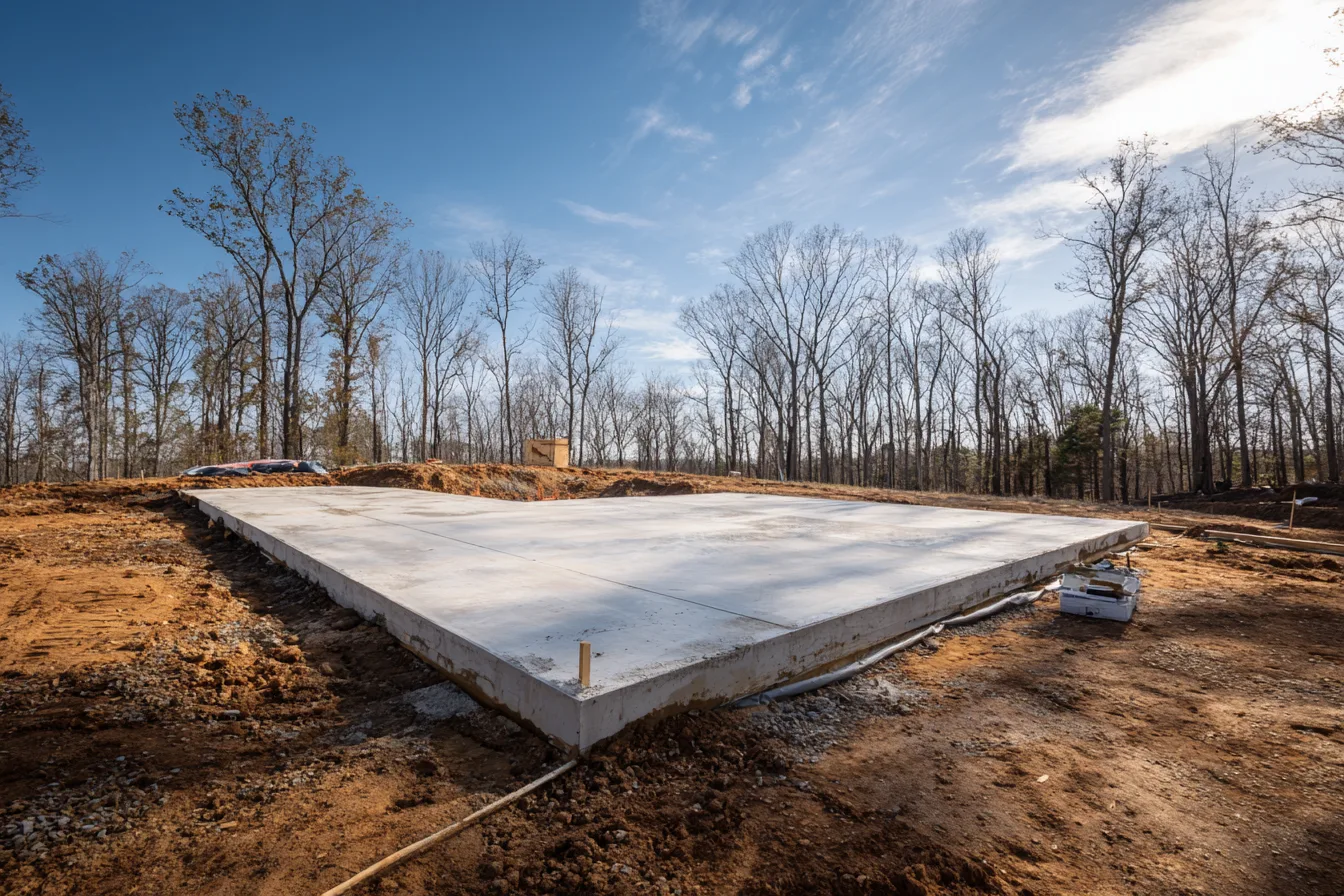
The monolithic slab is one of the most popular barndominium foundation types in warm climates with stable soils.
What it is: A single concrete pour that forms the floor slab and thickened perimeter edge (and sometimes interior footings) all at once.
Best for:
- Warm or moderate climates with shallow frost depth
- Well-drained, non-expansive soils
- Single-story barndominiums and shops
Advantages:
- Most cost-effective foundation type in many regions
- Fast to form and pour, reducing schedule time
- Clean, finished concrete floor for immediate use
Limitations:
- Not ideal on steep slopes or highly expansive clay
- Limited plumbing and mechanical changes once poured
- Requires careful reinforcement at column base plates and door openings
2. Thickened-Edge Slab with Interior Footings
For heavier barndominiums or multi-use shops, we often step up to a slab that integrates continuous interior footings aligned with metal frames or bearing walls.
What it is: A slab-on-grade with significantly thickened perimeters and additional thickened strips under main frame lines or load-bearing walls.
Best for:
- Barndominiums with second-story living or mezzanines
- Clear-span buildings with heavy roof or crane loads
- Areas with moderate frost depth where footings must extend below frost line
Advantages:
- Handles higher point loads from steel frames
- Still single-pour in many designs, keeping costs controlled
- Improved crack control when properly reinforced
Limitations:
- More complex layout to match frame lines and column locations
- Higher concrete and steel usage than a basic monolithic slab
3. Pier-and-Beam (Crawlspace) Foundations
Pier-and-beam systems are a strong option where soils are problematic or where you want under-floor access for plumbing and HVAC.
What it is: Individual concrete piers or drilled shafts extend down to competent soil or rock, supporting beams and a framed floor system above grade.
Best for:
- Expansive clay soils with large seasonal movement
- Sites with moderate slopes
- Barndominiums that need service access under the living area
Advantages:
- Can bypass poor surface soils and bear on deeper strata
- Excellent access for utilities, repairs, and retrofits
- Reduces risk of slab cracking from soil heave under living areas
Limitations:
- More structural framing; often higher material and labor costs for the floor system
- Requires careful moisture and ventilation planning in the crawlspace
4. Pier-Only / Post-Frame Foundations
Post-frame systems (commonly used for pole barns) rely on embedded posts or columns transferred into piers or thickened slabs.
What it is: Structural posts or steel columns bear on individual concrete piers or are embedded directly in concrete, with the floor slab poured later (or not at all in some ag buildings).
Best for:
- Agricultural or storage buildings where a finished slab may be optional
- Cost-conscious projects seeking maximum enclosed square footage
- Rural sites with minimal architectural requirements
Many of the principles from our pole barns construction & design projects carry over to barndominiums using a post-frame hybrid foundation system.
Advantages:
- Very economical structural shell in many regions
- Reduced excavation compared to full slab or basement
- Flexible floor finish options inside the shell
Limitations:
- Requires careful detailing at posts to manage decay and uplift
- Building codes may require engineered design and specific pier depths
- Less conventional for high-end residential finishes without additional framing
5. Basements and Frost-Protected Shallow Foundations
In colder climates, your choice narrows to two main directions:
- Full basement: Concrete walls and footings below frost depth with a slab floor.
- Frost-protected shallow foundation (FPSF): Insulated shallow footings designed to control frost penetration.
Both must be engineered to coordinate with steel frame column locations, point loads, and lateral bracing requirements.
Critical Site Prep Steps Before Any Foundation Type
No matter which barndominium foundation type you choose, poor site prep can sabotage the most carefully designed slab or pier system.
1. Geotechnical Investigation
Start with a soil test. A geotechnical engineer will:
- Identify soil type (sand, silt, clay, rock)
- Measure bearing capacity and settlement characteristics
- Flag expansive or collapsible soils that need special design
This report allows your structural engineer to size footings, specify pier depths, and design slab reinforcement consistent with industry standards from authorities like the Concrete design standards at ACI.
2. Grading, Drainage, and Pad Preparation
Proper grading protects your foundation from water—your biggest long-term structural enemy.
- Rough grade: Shape the site so surface water flows away from the building pad.
- Building pad: Over-excavate organic soils; replace with compacted structural fill.
- Compaction: Compact in thin lifts to meet engineered density requirements.
- Final grade: Maintain at least 5% slope away from the building for the first 10 feet.
Adding perimeter drains, gutters, and downspout extensions further reduces risk of settlement and frost heave.
3. Vapor and Moisture Control
For slabs, always include:
- Capillary break (typically 4–6 inches of compacted granular base)
- Poly vapor barrier beneath interior conditioned spaces
- Proper joint layout and curing practices per concrete industry guidelines
These details greatly improve comfort inside metal buildings, especially where you combine living and shop spaces under one roof.
Aligning Foundation Type With Your Barndominium Design
The best foundation is the one engineered for your specific barndo layout and site constraints. When we design a project, we always evaluate:
- Use and layout: Percentage of living vs. shop space, lofts, and second stories.
- Mechanical and plumbing plan: Locations of bathrooms, kitchens, and floor drains.
- Structural system: Pre-engineered steel frame, hybrid post-frame, or fully custom steel.
- Future flexibility: Potential for expansion, interior wall changes, or additional loads.
For some clients, the goal is the most economical enclosed space, which may favor a post-frame hybrid over a fully engineered slab. For others, premium finishes and radiant floor heat point strongly toward a high-performance slab with upgraded reinforcement and insulation details.
Our team’s role is to translate your goals into a foundation system and site prep plan that works for your soils, climate, and budget. That same approach carries across our agricultural and shop builds as well as our residential barndominiums.
Next Steps: From Foundation Type to Full Build
Once you understand the main barndominium foundation types, the next step is to integrate that choice into a complete building package—frame, shell, and interior finishes that all work together structurally.
If you’re still comparing building systems, it’s worth looking at how foundations interact with different structures. For example, a post-frame shell may allow more forgiveness on certain soils, while a rigid steel frame can span farther with fewer columns but demands more precise footing design.
To dive deeper into how structure and foundation design coordinate on our projects, explore our resources on barndominium design and construction and our detailed approach to pole barn construction design for post-frame style builds.
When you’re ready, our design team can review your site conditions, climate zone, and building concept to recommend and engineer the foundation type that gives your barndominium the strongest possible start.


What do you think?
It is nice to know your opinion. Leave a comment.