


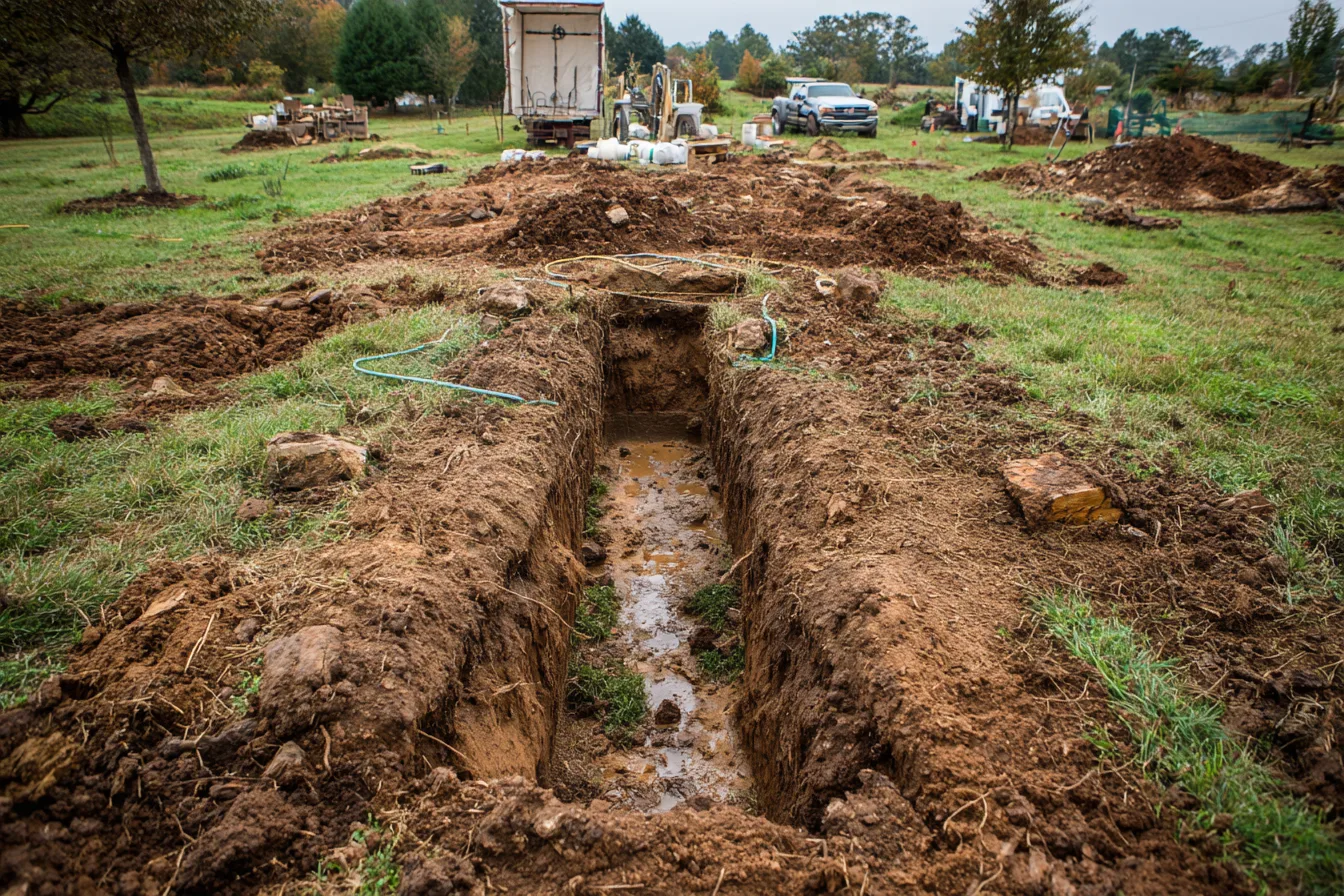






Septic System Requirements for Rural Barndominiums
- A barndominium septic system must meet the same health and environmental codes as any rural home, often with stricter site constraints.
- Sizing is based primarily on bedrooms and soil capability, not just square footage or shop size.
- Soil testing, percolation tests, and exact placement should be addressed during early site prep, before your slab or pier foundations are designed.
- Permit approvals, inspections, and set-backs from wells, property lines, and structures are non‑negotiable.
- Coordinating your septic layout with driveway, utilities, and future expansion plans prevents costly conflicts later.
For many rural landowners, a barndominium is the ideal combination of home, shop, and storage. But no rural build is complete without a properly engineered and permitted barndominium septic system. Getting this wrong can halt your inspections, compromise your water well, and force expensive redesigns.
As dedicated barndominium builders, we integrate septic planning into the broader about and site prep process so your structure, utilities, and drainage function as a single, code-compliant system.
How a Barndominium Septic System Works
Functionally, a barndominium septic system is the same as any rural residential system. Wastewater from toilets, sinks, showers, laundry, and floor drains exits the barndominium through a building sewer and enters a buried septic tank. From there it passes to a soil treatment area (drainfield, leach field, or alternative system) for final treatment and dispersal.
Core Components
- Building sewer: Gravity or pumped line from the barndominium to the tank.
- Septic tank: Settles solids, begins biological treatment, and protects the soil field from overload.
- Distribution system: Gravity manifold, dosing tank, or pressure network delivering effluent evenly to the field.
- Soil absorption area: Trenches, beds, chambers, or drip lines where soil completes treatment and dispersal.
Local health and environmental departments regulate design to prevent groundwater contamination and protect public health. For guidance on wastewater and pathogen control, many codes reference standards and data from organizations such as the CDC.
Code, Permits, and Setback Requirements
Every rural barndominium must comply with state and county onsite wastewater regulations. While exact distances and rules vary, you should expect the following requirements at minimum:
Typical Setbacks (Your Jurisdiction May Differ)
- Minimum distance from private water wells and springs.
- Minimum distance from ponds, streams, and drainage swales.
- Offsets from property lines, roads, and easements.
- Clearance from foundations, slabs, and retaining walls.
Because barndominiums often have large roof areas, metal siding, and extended driveways, stormwater management is also part of septic protection. Concentrated runoff must be directed away from the tank and drainfield.
Permit and Inspection Sequence
- Site evaluation: Soil and topographic review by a licensed designer or sanitarian.
- Percolation/soil testing: Determines infiltration rate and suitable system type.
- System design: Drawings and calculations based on bedrooms and soil capacity.
- Permit application: Submission to the local health/environmental department.
- Rough inspection: Tank and field layout inspection before backfilling.
- Final inspection: After installation but before occupancy.
Skipping or compressing these steps can delay your Certificate of Occupancy and, in some areas, trigger enforcement actions or mandatory system replacement.
Sizing a Barndominium Septic System
Owners often assume system size is based on total square footage, including shop bays. In most jurisdictions, minimum septic capacity is driven by bedroom count and design flow, with adjustments for soil limitation and water-use fixtures.
Variables That Influence Sizing
- Number of bedrooms: Regulatory stand‑in for occupancy and daily flow.
- Plumbing fixtures: Extra baths, laundry rooms, utility sinks, or apartment wings.
- Soil type and percolation rate: Slower soils require larger or alternative systems.
- Groundwater depth: Shallow groundwater may require raised beds or advanced treatment.
- Local code tables: Each state publishes design flow and loading-rate charts.
Because many barndominiums include future-finish lofts or additional bedrooms, we recommend sizing for planned build‑out rather than the initial phase. Upsizing the tank and drainfield at the start is far cheaper than replacing an undersized system later.
Site Prep Integration: Septic, Slab, and Utilities
Septic cannot be treated as an afterthought once the barndominium shell is erected. Correct sequencing during site prep saves time, money, and rework.
Critical Coordination Steps
- Preliminary layout: Before grading, block out zones for the house pad, drive, septic tank, primary field, and a reserve field.
- Rough grading: Shape the pad and drainage so runoff bypasses the future drainfield area.
- Utility routing: Coordinate power, water, and propane lines so they do not conflict with tank or field trenches.
- Plumbing stub-out: Align the building sewer with the tank location to minimize bends and pumping needs.
On barndominiums with large attached shops, it’s critical to distinguish sanitary drains from any shop floor drains that might capture oils, solvents, or process water. In many jurisdictions, those cannot discharge into a standard septic system without pretreatment.
Conventional vs. Alternative Systems for Rural Land
Your soil and site constraints will determine whether a standard gravity system is allowed or an engineered alternative is required.
Conventional Gravity Systems
Used where:
- Soils have adequate permeability and depth to restrictive layers.
- Groundwater and bedrock are sufficiently deep.
- Topography allows gravity flow from the barndominium to the field.
Benefits include lower installation cost, fewer mechanical components, and simpler maintenance.
Pressure and Alternative Systems
Required when:
- Soils are shallow, slow, or highly variable.
- The site is steep or the drainfield must be located uphill.
- Local code specifies advanced treatment near sensitive water resources.
These systems can include pressure distribution, mound systems, aerobic treatment units, and drip dispersal. While more expensive, they allow otherwise unbuildable rural sites to support a compliant barndominium.
Maintenance and Long-Term Protection
Once your barndominium septic system is installed, protecting that investment is as important as getting the design right.
Owner Best Practices
- Schedule tank pumping at code-recommended intervals.
- Keep heavy vehicles, equipment, and new buildings off the tank and field.
- Divert roof gutters and surface runoff away from absorption areas.
- Avoid flushing wipes, grease, solvents, or shop chemicals.
- Retain as‑built drawings and record component locations before backfill.
Thoughtful landscaping and traffic control around the drainfield area should be part of your overall barndominium planning, not an add‑on after move‑in.
Integrating Septic Design With Your Barndominium Build
Because septic, grading, and foundation design are tightly linked, involving your barndominium builder early in the process is essential. We routinely coordinate with soil scientists, septic designers, and local inspectors to align:
- Floor plan and plumbing wall locations.
- Driveway and concrete apron layouts.
- Future shop expansions or additional living wings.
This integrated approach ensures your rural barndominium performs like a modern home, complies like a public health facility, and functions for decades without hidden septic surprises.
If you are planning a new build, treat the barndominium septic system as a core structural component, not a buried accessory. Done right at the site‑prep stage, it quietly supports everything else you want your property to become.


What do you think?
It is nice to know your opinion. Leave a comment.