






Multi-Generational Living in a Barndominium: Plans, Layouts & Strategy
- Multi-generational barndominium plans prioritize privacy, accessibility, and flexible shared spaces.
- Clear-span barndo structures make it easier and more cost-effective to customize layouts for multiple generations.
- Thoughtful zoning, sound control, and aging‑in‑place features protect comfort and long-term value.
Why Multi-Generational Barndominiums Are Surging
More families are choosing to live together longer. Rising housing costs, the desire to care for aging parents, and the need for built‑in childcare have all made multi-generational homes more attractive. National demographic data, including research highlighted by AARP, shows a steady increase in households with three or more generations under one roof.
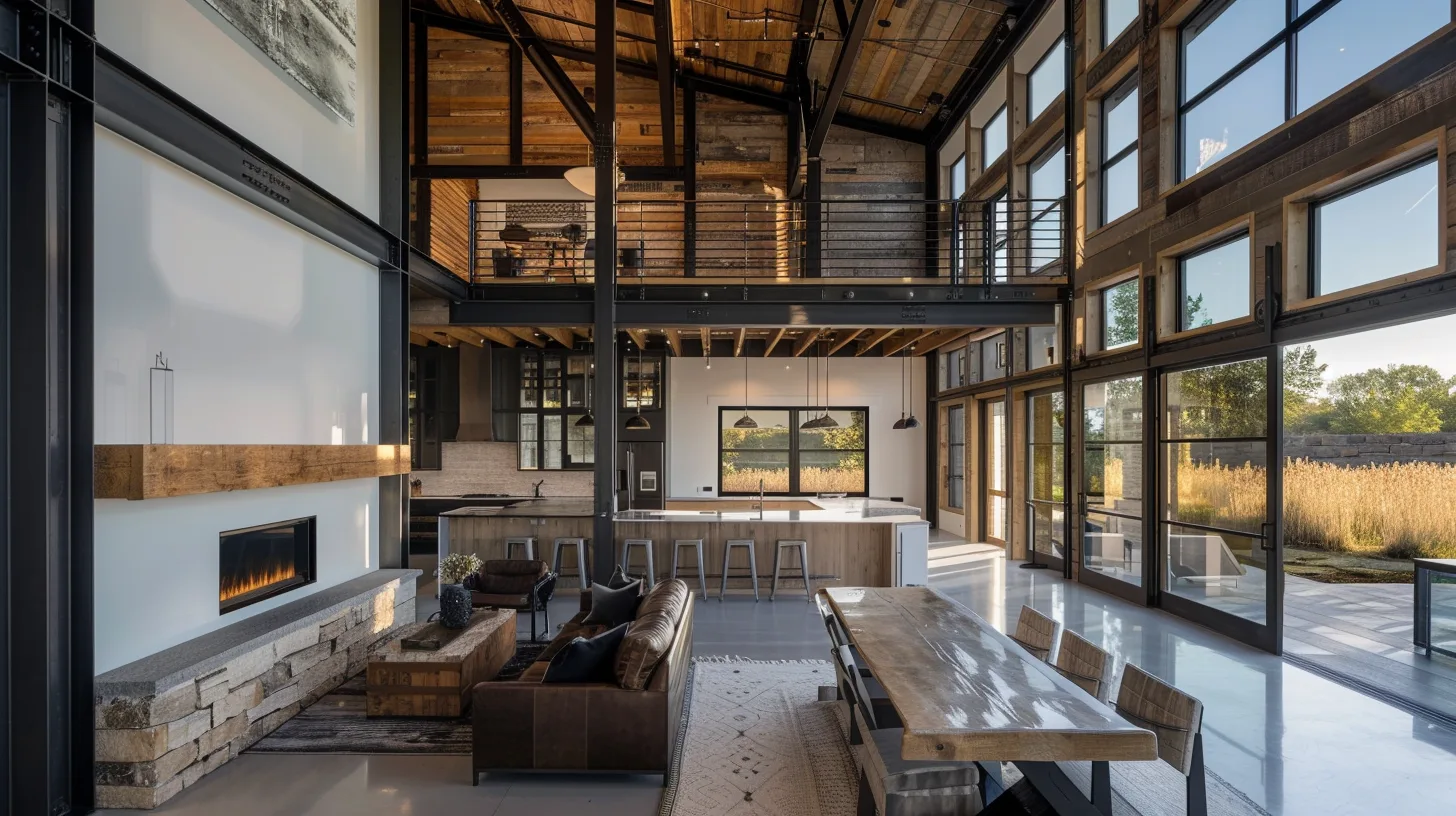
Barndominiums are uniquely suited to this lifestyle. Unlike traditional stick-built homes, barndos rely on wide-span steel or post-frame structures, which means fewer interior load-bearing walls and far more flexibility when designing multi-generational barndominium plans. You can configure private suites, dual living rooms, or even two semi-independent “wings” under a single roof, all with efficient construction timelines.
Core Principles of Multi-Generational Barndominium Plans
To truly work for multiple generations, a barndominium layout must go beyond simply “adding more bedrooms.” Smart design weaves together privacy, connection, and accessibility.
1. Zoning the Home Into Distinct Living Areas
Effective multi-generational barndominium plans organize the structure into clear zones:
- Primary family zone: Main kitchen, dining, and living room used by everyone.
- Secondary suite zone: In‑law suite, adult child suite, or guest wing with bedroom, bathroom, and often a small living area.
- Shared function zone: Laundry, mudroom, storage, mechanical room, and possibly a joint hobby or gym space.
Because the barndominium shell is so open, these zones can be created with non-load-bearing walls, allowing maximum reconfigurability in the future as family needs change.
2. Balancing Privacy and Togetherness
Privacy is the top concern in multi-generation living. To handle this, our plans typically incorporate:
- Split-bedroom layouts: Primary suite on one side, in-law suite or second primary on the opposite side.
- Offset entrances: A shared main entry plus a discrete side entry for the secondary suite, if desired.
- Private outdoor spaces: Covered patios or porches accessed directly from each suite.
3. Accessibility and Aging in Place
Multi-generational living almost always involves planning for aging in place. Drawing from widely accepted accessibility concepts such as universal design and common ADA dimensional guidelines, we recommend:
- Single-level floor plans, or at least main-level suites for seniors.
- Minimal or no steps at entrances.
- Wider hallways and doorways (often 36″ doors and 42″+ halls).
- Curbless showers and reinforced walls for future grab bars.
- Lever-style handles, non-slip flooring, and motion lighting.
The inherent structural flexibility of a barndominium means these features can be integrated without complicated engineering changes.
Popular Multi-Generational Barndominium Layout Concepts
Different family structures call for different configuration strategies. Below are three patterns we routinely adapt when developing multi-generational barndominium plans for our clients.
Option A: Dual-Suite Split Plan
This is one of the most flexible and budget-friendly formats:
- Central open-concept kitchen, dining, and great room.
- Owner’s suite on one side, in-law suite on the other.
- Each suite with a full bath and walk-in closet; optional sitting area in the in-law suite.
- Shared laundry and pantry strategically located near both suites.
Use this when grandparents or adult children want proximity but don’t need a fully independent apartment.
Option B: Two-Wing “Semi-Duplex” Barndominium
For higher privacy or two nearly independent households, we recommend a two-wing layout:
- Each wing has its own living room, bathroom(s), and bedrooms.
- Shared or partially shared kitchen at the “center” connection point.
- Separate exterior doors and parking areas, possibly under a shared roof.
- Expandable attic or loft storage above the central shared area, if desired.
This format works well when adult children plan to raise their own family on-site while maintaining clear household boundaries.
Option C: Main Home + Attached ADU (Accessory Dwelling Unit)
Some families want a clear “main house” and a smaller secondary dwelling. In a barndominium, this can be integrated as:
- A one-bedroom or studio ADU with kitchenette and private bath.
- Direct interior connection through a lockable door.
- Private exterior entrance and patio for the ADU.
- Shared utilities and mechanical systems for cost efficiency.
This pattern is ideal for caregivers, boomerang kids, or rental flexibility in the future.
Technical Design Considerations for Multi-Generational Barndos
1. Structural Layout and Clear-Span Advantages
Barndominiums commonly use steel or post-frame structures with large clear spans. For multi-generational plans, this allows us to:
- Place load-bearing columns mostly at exterior walls, freeing interior space.
- Reconfigure rooms later with non-structural walls as family dynamics change.
- Stack plumbing and mechanical chases efficiently between suites.
2. Sound Control Between Generations
Sound separation is crucial when grandparents go to bed earlier or babies cry at night. We typically specify:
- Staggered-stud or double-stud walls between suites and main gathering spaces.
- Insulated interior walls and solid-core doors at suite entries.
- Strategic placement of closets or pantries as sound buffers between bedrooms and living areas.
3. Mechanical Systems and Zoning
Multi-generational barndominiums often benefit from zoned mechanical systems:
- Separate HVAC zones for each suite or wing for comfort and efficiency.
- Dedicated water-heating loops sized for the full occupancy load.
- Accessible shutoffs and controls so each generation can manage comfort independently.
Planning Process: From Concept to Move-In
Designing the right multi-generational layout requires a methodical approach. Use this high-level roadmap when you sit down with your barndominium builder and designer.
Step 1: Define Household Composition and Time Horizon
- List all current residents and their age ranges.
- Estimate how long each generation is likely to live in the home (5, 10, 20+ years).
- Note special needs: mobility, medical equipment, work-from-home, or hobbies.
Step 2: Decide Privacy Levels and Shared Spaces
- Choose between a dual-suite, two-wing, or main+ADU configuration.
- Identify which spaces are fully shared (kitchen, laundry, garage) vs. duplicated (living room, kitchenette).
- Discuss expectations for noise, guests, and schedules to inform zoning.
Step 3: Align Budget With Must-Have Features
- Prioritize structural and accessibility elements first (single-level, wider doors, bathrooms).
- Add comfort upgrades like soundproofing and covered outdoor spaces.
- Plan for future-ready features: framed elevator shafts (in 2-story builds), flex rooms, or convertible lofts.
Our team often starts with a base template from our barndominium plans and designs catalog, then customizes it to meet these multi-generational requirements.
Lifestyle Benefits Beyond the Floor Plan
Done correctly, a multi-generational barndominium delivers more than square footage.
- Financial resilience: Shared mortgage, utilities, and maintenance reduce per-person costs.
- Built-in support network: Immediate access to childcare, elder care, and daily help.
- Stronger relationships: Grandparents, parents, and children interact naturally within shared spaces.
- Future flexibility: Suites can transition to guest spaces, home offices, or rental units as life changes.
Many families also appreciate the ability to phase life events (retirements, college returns, health transitions) without disruptive moves, something multi-generational barndominium plans are uniquely capable of accommodating.
Start Designing Your Multi-Generational Barndominium
Multi-generational living works best when it’s intentionally designed from day one. By combining clear-span barndominium construction with thoughtful zoning, sound control, and accessibility planning, you can create a home that serves your family for decades.
If you’re ready to explore specific layouts, square footage options, and customization paths, our design team can help translate your family dynamics into a practical, buildable plan tailored to your site and budget.


What do you think?
It is nice to know your opinion. Leave a comment.