





Fire Resistance of Steel Frame Homes vs Wood: What It Means for Barndominium Fire Safety
- Steel frames are non-combustible and generally improve barndominium fire safety compared to conventional wood framing.
- Real-world fire performance depends just as much on interior finishes, insulation, and code-compliant detailing as on the frame material.
- Proper separation between shop/garage and living areas, plus good maintenance, is critical in barndominiums.
- Following recognized fire codes and NFPA guidance can reduce losses and may help with insurance and resale value.
Barndominiums are popular because they combine residential comfort with the open spans and durability of a metal building. But as more families move into these homes, one technical question keeps coming up: how does a steel-frame barndominium actually perform in a fire compared to a traditional wood-frame house?
As barndominium builders focused on long-term performance and safety, we want to walk you through the real science and code considerations behind barndominium fire safety, not just marketing claims. Understanding how steel and wood behave in a fire helps you make smarter design, construction, and maintenance decisions for your home.
How Steel and Wood Behave in a Fire
Steel: Non-Combustible but Heat Sensitive
Steel is classified as a non-combustible material: it does not ignite, burn, or contribute fuel to a fire. That is a significant advantage in any structure, and one reason modern codes often favor steel for certain fire-rated assemblies.
However, steel does lose strength as temperature rises. At roughly 1,000–1,100°F (538–593°C), unprotected structural steel can lose 40–50% of its yield strength, and at higher temperatures it can deform under load. In a barndominium:
- Properly detailed steel frames are protected by interior gypsum board assemblies that slow heat rise.
- Truss and column design accounts for higher loads at elevated temperatures.
- Fire-rated assemblies can be used where required by code, such as between dwelling and shop/garage spaces.
Wood: Combustible but Predictable
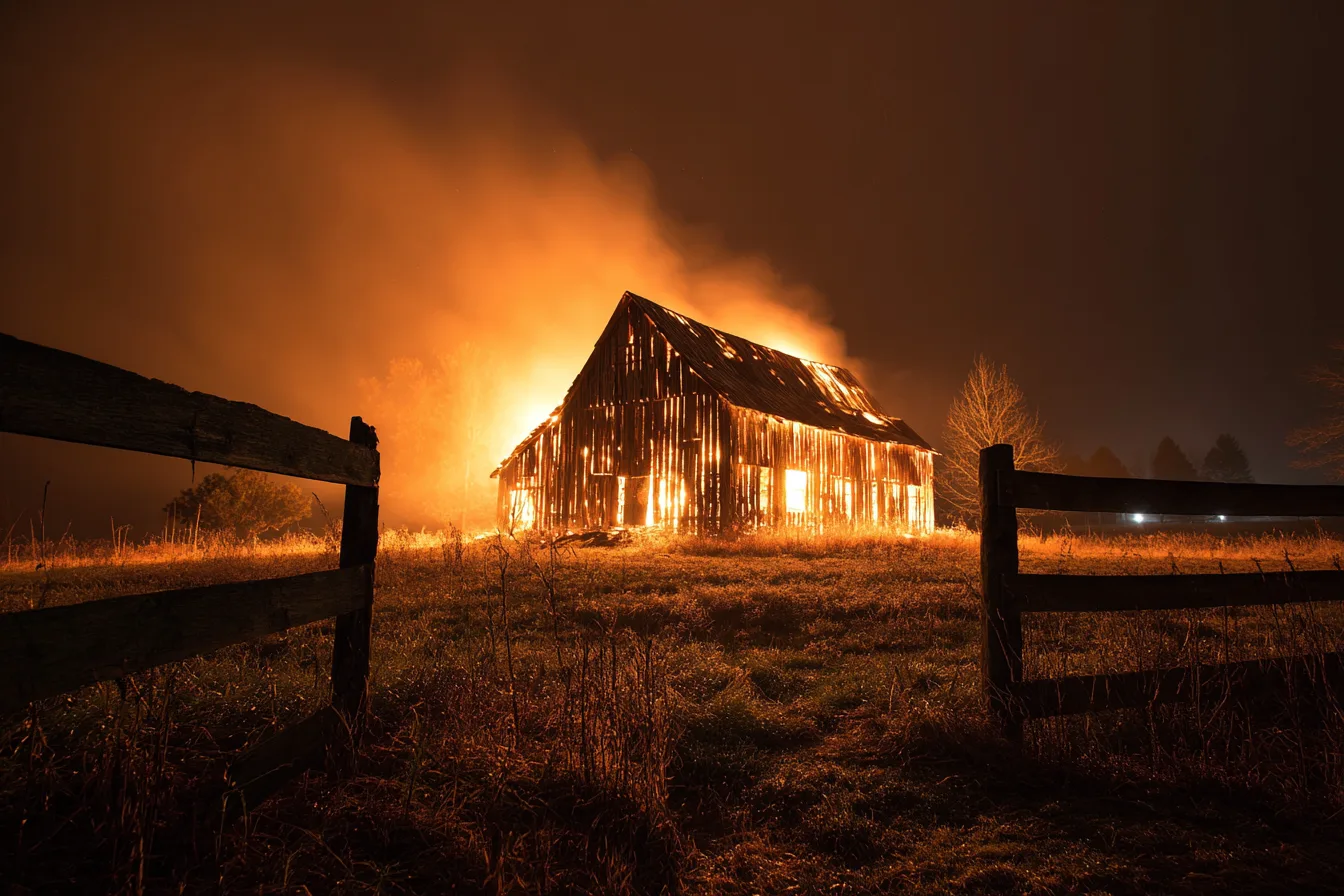
Dimensional lumber and engineered wood are combustible and act as fuel in a fire. Once ignition occurs, wood framing contributes to fire growth and duration. That said, wood does char at a relatively predictable rate, and building codes use that predictability in fire rating calculations.
In a strictly residential, fully sprinklered, and well-compartmentalized environment, wood-framed homes can perform acceptably. But when you combine large open spans, vehicles, fuel, and equipment – as in a typical barndominium with a shop – the fuel load grows quickly, and wood framing can accelerate structural failure if the fire is not contained early.
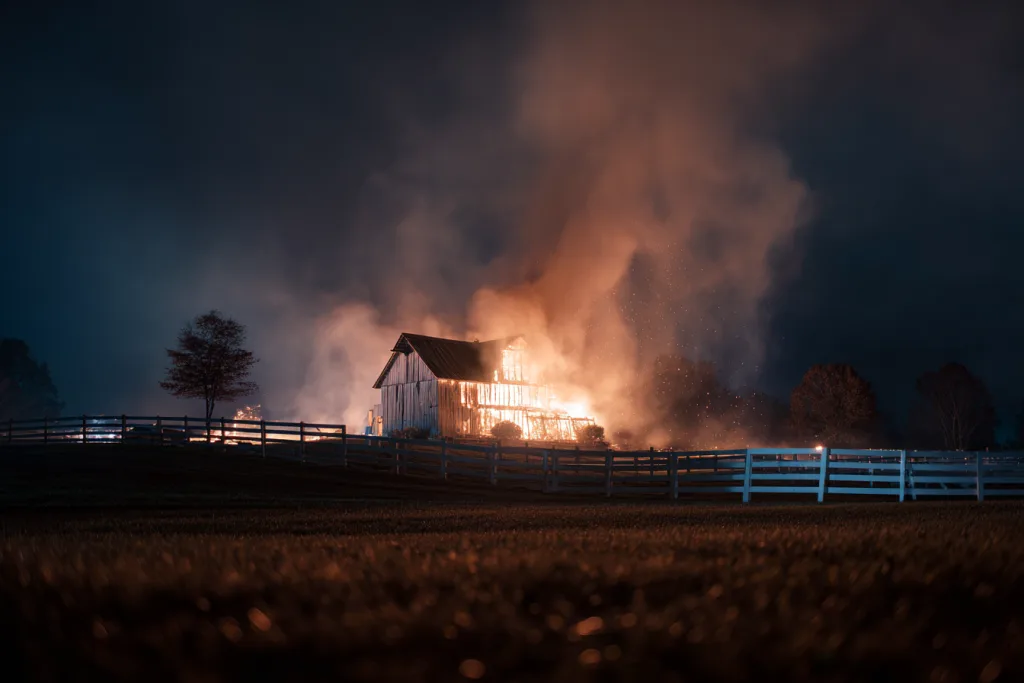
A burning wood structure highlighting the importance of fire-resistant building materials like steel.
Barndominium Fire Safety: Why the Frame Is Only One Piece
Choosing a steel frame eliminates one major source of fuel, but overall barndominium fire safety still depends on multiple layers of design and construction:
1. Compartmentation and Fire Separation
Many barndominiums blend living areas with large shops, RV bays, or agricultural storage. This mixed-use nature can dramatically increase fire load on one side of the structure. The most critical protective measure is separation between those uses.
- Use fire-rated wall and ceiling assemblies between the residence and shop/garage areas.
- Install self-closing, fire-rated doors in any communicating openings.
- Seal penetrations (ducts, conduit, plumbing) with appropriate fire-stopping materials.
When we design and build, we treat that separation line as a firewall that must maintain integrity long enough for occupants to escape and for firefighters to work safely.
2. Interior Finishes and Insulation
A steel frame wrapped in highly combustible interior finishes can still burn aggressively. Key decisions include:
- Gypsum board thickness and type: 5/8-inch Type X gypsum offers better fire resistance than standard 1/2-inch board and is often used in fire-rated assemblies.
- Insulation choices: Properly installed mineral wool or fiberglass can perform better in a fire than some exposed foams. Where foam is used, we ensure approved thermal barriers cover it, per code.
- Wall/ceiling assemblies: We align with UL-tested or code-approved assemblies when fire ratings are required.
3. Electrical and Mechanical Systems
A large portion of residential fires start with faulty wiring, overloaded circuits, or improperly vented appliances. In a barndominium, this is compounded by the presence of welders, compressors, and other high-draw equipment.
We emphasize:
- Dedicated circuits and correctly sized panels for shop equipment.
- Code-compliant GFCI/AFCI protection where required.
- Noncombustible clearances around mechanicals and flues.
Steel Frame Barndominiums vs Wood Homes: Performance Snapshot
Fire Safety Advantages of Steel-Frame Barndominiums
- Non-combustible primary structure (columns, rafters, girts).
- Less hidden charring in concealed cavities compared to wood studs.
- Better compatibility with metal roofing and siding for exterior fire exposure.
- Potential for lower structural damage in small, quickly controlled fires.
Where Wood Homes Can Be At a Disadvantage
- Combustible framing throughout walls, floors, and roofs.
- Faster fire spread through concealed stud and joist cavities if not blocked.
- More structural fuel in attic and floor systems once fire breaches gypsum barriers.
For owners deciding between a wood pole building and a steel-frame barndominium, understanding structural and fire differences is key. Our detailed guide on
pole barns pros cons
explains why many clients choose steel framing when long-term durability and fire performance are top priorities.
Code, Standards, and Best Practices for Barndominium Fire Safety
We design our projects to align with nationally recognized codes and standards, then adapt to local amendments. Organizations such as the
National Fire Protection Association (NFPA)
publish research-based guidance on electrical systems, sprinklers, alarm placement, and wildland–urban interface construction that informs our approach.
Key Elements We Consider in Every Project
- Occupancy classification: Determining whether the space is strictly residential or mixed-use (residential plus shop, storage, or agricultural) drives fire separation requirements.
- Required fire-resistance ratings: Walls and ceilings separating dwelling units from garages/shops or mechanical rooms may need 1-hour or higher ratings, depending on code.
- Detection and egress: Interconnected smoke alarms, carbon monoxide detectors, and properly sized egress windows and doors are essential for safe escape.
- Roofing and exterior materials: In wildfire-prone regions, we prioritize Class A roofing, noncombustible siding, and defensible space around the building.
Homeowner Maintenance Checklist for Better Fire Resistance
Even the best-designed steel-frame barndominium needs regular maintenance to keep fire risk low. Use this simple checklist:
1. Inspect and Test Safety Systems (Every 6 Months)
- Test smoke alarms and CO detectors; replace batteries as needed.
- Verify fire extinguishers are charged and accessible in kitchen, shop, and mechanical areas.
- Check that fire-rated doors between living space and shop/garage close and latch properly.
2. Electrical and Mechanical Safety (Annually)
- Have a licensed electrician evaluate panels and high-load circuits in shops.
- Clean dryer vents and appliance exhausts to remove lint and dust buildup.
- Maintain clearance around furnaces, water heaters, and wood or pellet stoves.
3. Building Envelope and Housekeeping
- Keep vegetation, firewood, and fuel storage away from the building perimeter.
- Seal any new penetrations (cable, plumbing, ducts) through fire-rated walls/ceilings with appropriate sealants.
- Store flammable liquids in approved containers away from living spaces.
Designing Your Barndominium for Maximum Fire Safety
Choosing steel framing is an important first step, but real fire resilience comes from a coordinated design:
- Clear separation between residential and high-fuel-load areas.
- Noncombustible or fire-resistant materials where they matter most.
- Thoughtful placement of exits, alarms, and equipment.
If you are in the early planning stages, we can help you compare structural systems, shop layouts, and finish options to balance cost with safety, speed of construction, and long-term maintenance. Our team specializes in turning steel-frame building shells into efficient, code-compliant homes that protect your family and your investment.
For more insights on structural systems and long-term performance for your future barndominium, visit our resources at
Barndo Builders
and explore our planning guides and build process. Together, we can design a steel-frame barndominium that not only looks great and lives comfortably, but also delivers the level of fire safety you expect from a modern home.


What do you think?
It is nice to know your opinion. Leave a comment.