






How to Design a Barndominium with a Shop
Designing a barndominium with shop plans is one of the smartest ways to combine residential comfort with functional workspace. Whether you need a garage, workshop, business space, or hobby area, a well-designed layout can dramatically improve efficiency, usability, and long-term value.
This guide walks you through exactly how to plan, design, and optimize a barndominium with a shop—without costly mistakes.
What Is a Barndominium with a Shop?
A barndominium with a shop is a hybrid structure that integrates living quarters with a dedicated workspace. Unlike traditional homes, these designs allow you to keep tools, equipment, and vehicles just steps away from your living space.
Common uses include:
– Auto and equipment storage
– Woodworking or fabrication shops
– Home-based businesses
– Agricultural or ranch operations
For a broader understanding of layouts, see what is a barndominium.
Key Design Goals for Barndominium with Shop Plans
Before jumping into floor plans, define your priorities. The best designs are built around how you actually live and work.
1. Separation of Spaces
Keep living and working areas distinct to reduce noise, dust, and odors.
Options include:
– Separate entrances
– Insulated dividing walls
– Offset layouts
2. Workflow Efficiency
Design your shop so tasks flow logically from one area to another.
Examples:
– Storage → Workbench → Assembly → Exit
– Vehicle access aligned with tool zones
3. Future Flexibility
Your needs may evolve. Plan extra space and adaptable layouts to avoid expensive renovations later.
Popular Layout Options
Choosing the right layout is critical for functionality and comfort.
Side-by-Side Layout
This is the most common option.
Pros:
– Easy separation of spaces
– Simple construction
– Balanced footprint
Cons:
– Larger footprint required
L-Shaped Layout
Creates natural separation and privacy.
Pros:
– Reduces noise transfer
– Allows for outdoor courtyard space
Cons:
– More complex foundation
Two-Story Living Above Shop
Maximizes land use.
Pros:
– Smaller footprint
– Great for small lots
Cons:
– Requires stronger structure and soundproofing
Explore layout inspiration in barndominium floor plans.
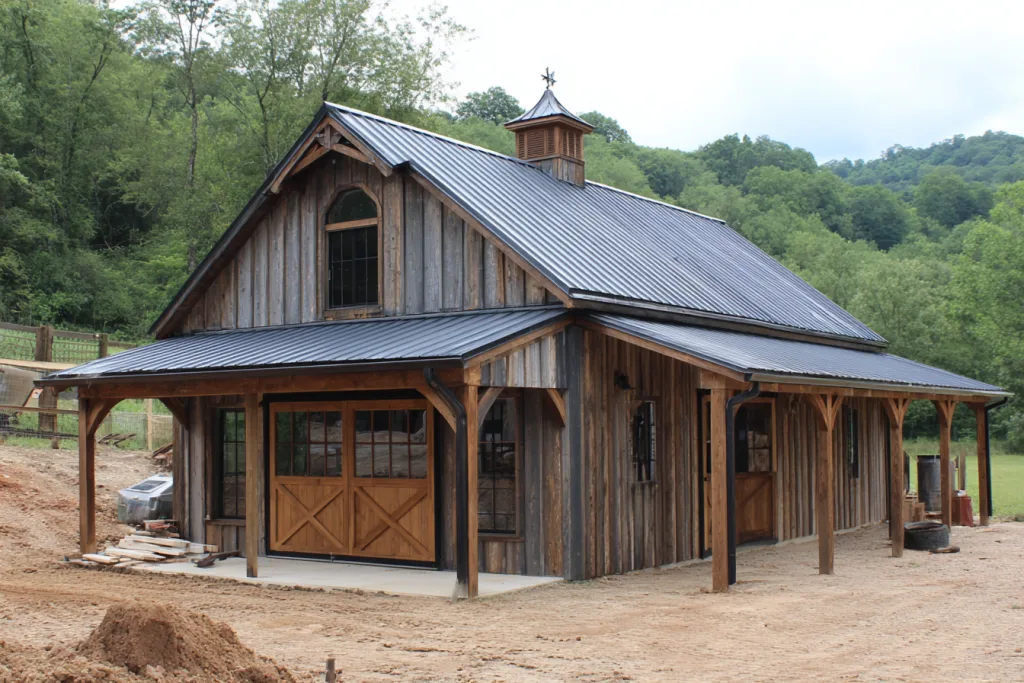
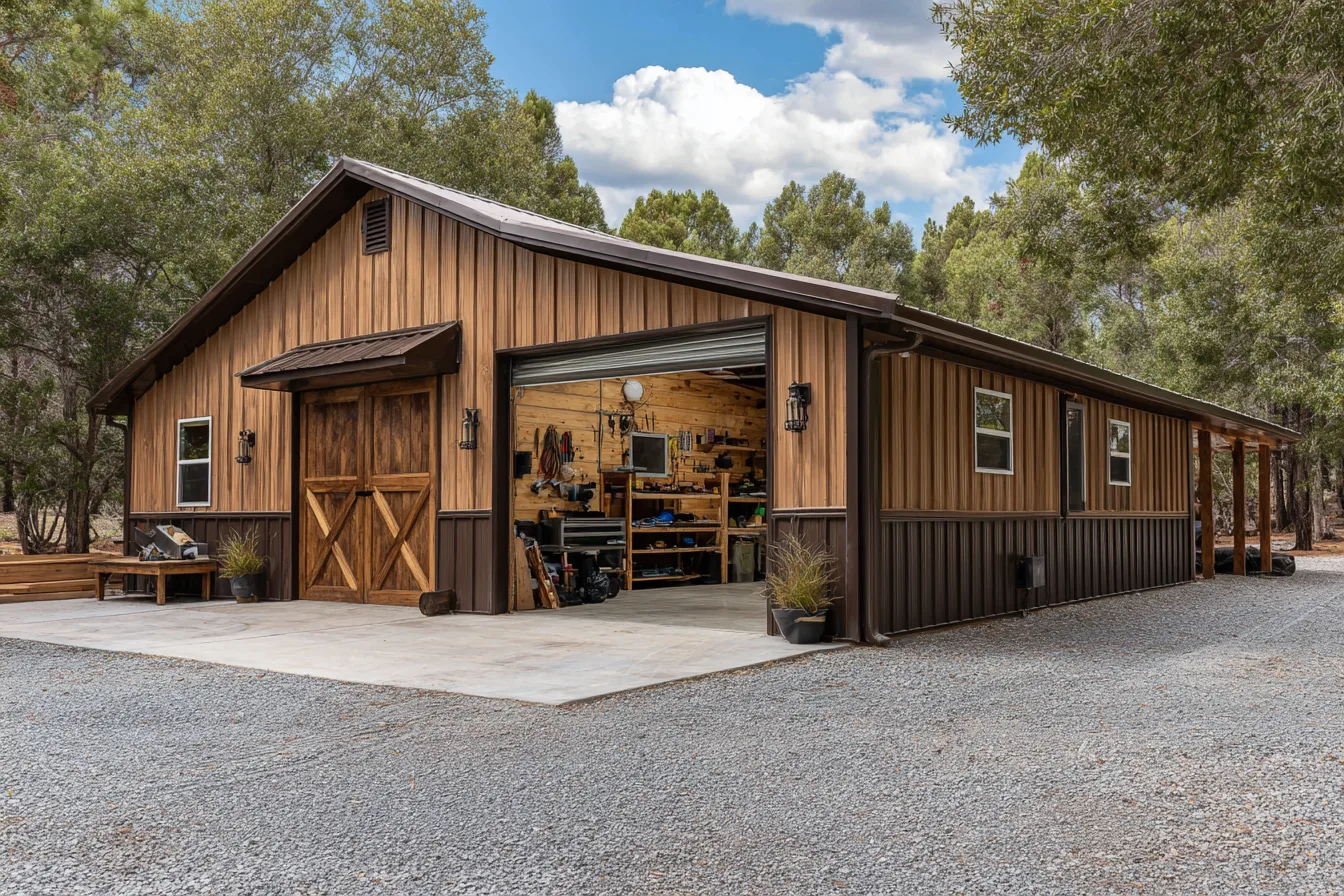
rustic barndominium with shop space attached workshop exterior design metal roof
Step-by-Step: Designing Your Barndominium with Shop
Follow this proven planning process to avoid costly mistakes.
Step 1: Define Shop Function
Ask yourself:
– What activities will happen in the shop?
– What equipment needs space?
– Do you need vehicle lifts or large doors?
Step 2: Determine Square Footage
Typical size ranges:
– Living space: 1,200–2,500 sq ft
– Shop space: 800–2,000+ sq ft
Step 3: Plan Access Points
Include:
– Overhead doors for vehicles
– Walk-through doors for convenience
– Direct but controlled access to living space
Step 4: Design Utilities
Plan for:
– Electrical capacity for tools
– Plumbing if needed
– HVAC separation
Step 5: Choose Structural System
Pole barn or steel frame construction impacts layout flexibility. Learn more at pole barn vs stick built.
Must-Have Features for a Functional Shop
A well-designed shop goes beyond just open space.
Essential features include:
– High ceilings (12–16 feet)
– Large roll-up doors
– Reinforced concrete slab
– Adequate lighting (natural + LED)
– Ventilation systems
– Built-in storage solutions
Optional upgrades:
– Vehicle lifts
– Floor drains
– Heated floors
– Soundproof insulation
Cost Considerations
Design decisions directly impact your budget.
Factors influencing cost:
– Total square footage
– Shop size and features
– Materials and finishes
– Location and labor
Average cost estimates:
– Basic build: $100–$150 per sq ft
– High-end build: $150–$250+ per sq ft
Combining a home and shop can significantly reduce costs compared to separate structures. For deeper pricing insights, visit barndominium cost guide.
External reference: Review construction cost data from U.S. Census Bureau.
Zoning, Codes, and Permits
Before building, confirm local requirements.
Checklist:
– Zoning approval for mixed-use structures
– Building permits
– Fire separation requirements
– Septic and utility approvals
Check local regulations through resources like USA.gov building permits guide.
Design Mistakes to Avoid
Many homeowners overlook these critical issues.
Avoid:
– Undersizing the shop
– Poor sound insulation
– Inadequate electrical planning
– Lack of storage space
– Improper airflow and ventilation
Fixing these later is expensive—design correctly from the start.
Practical Checklist for Designing Your Barndominium with Shop
Use this checklist before finalizing your plans:
– Define shop purpose and equipment needs
– Choose layout (side-by-side, L-shape, etc.)
– Plan separate entrances and access points
– Ensure proper insulation and sound control
– Design electrical and HVAC systems
– Confirm zoning and permit requirements
– Plan for future expansion
Key Takeaways
– Barndominium with shop plans combine living and workspace efficiently
– Layout selection impacts usability, privacy, and cost
– Proper planning prevents expensive redesigns
– Shop size and features should match actual use
– Zoning and permits must be confirmed early
FAQs
What is a barndominium with a shop?
A barndominium with a shop combines residential living space and a functional work area into a single structure, often used for storage, hobbies, or business.
How big should a shop be in a barndominium?
Most shops range from 800 to 2,000 square feet, depending on equipment, vehicles, and intended use.
Is it cheaper to build a barndominium with a shop?
Yes, combining both into one structure typically reduces construction, foundation, and utility costs.
What layout is best for a barndominium with a shop?
Side-by-side layouts are the most popular, but L-shaped and two-story options offer unique advantages depending on space and needs.
Do I need special permits for a shop?
Possibly. Local zoning laws may require permits for mixed-use buildings, especially if used for business.
Can I add a shop later?
Yes, but it is often more cost-effective and structurally efficient to include it in the initial design.
How do I reduce noise from the shop?
Install soundproof insulation, use separate walls, and position the shop away from bedrooms.
What ceiling height is best for a shop?
A height of 12–16 feet is ideal for most workshops, especially if using large equipment or vehicle lifts.


What do you think?
It is nice to know your opinion. Leave a comment.