


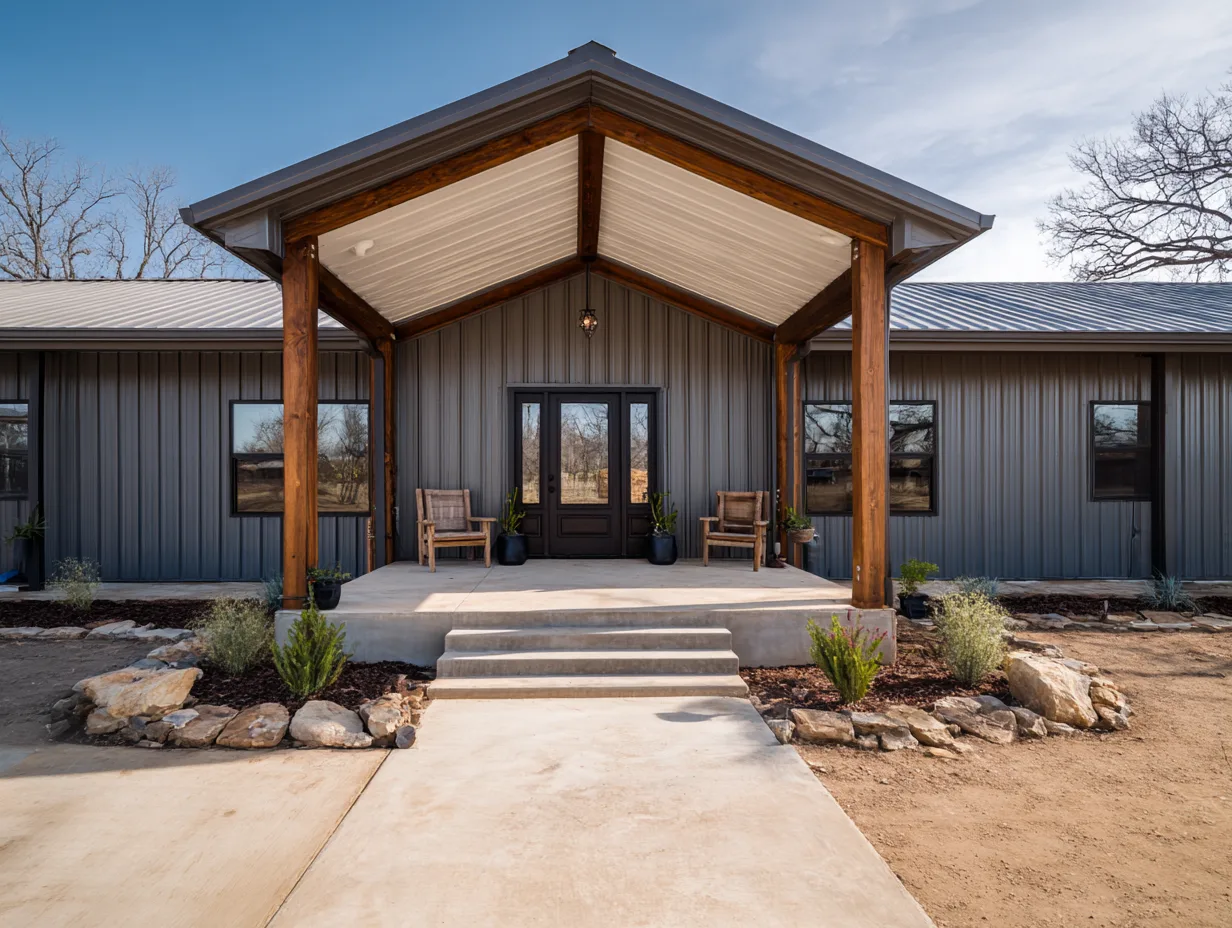






The Barndominium Master Plan
Designing a barndominium isn’t just about throwing up steel and pouring a slab for today—it’s about engineering a living structure that evolves. Barndominium expansion planning is the strategic difference between a home that scales seamlessly and a property bottlenecked by expensive retrofits.
The Brutal Math of Retrofitting
Failing to plan for expansion doesn’t just cause headaches; it hemorrhages money. When you don’t bake future growth into your initial blueprints, you are forced to pay a massive premium to tear up concrete and retrofit utility lines.
| Infrastructure Target | Pre-Planned (Phase 1) | Retrofitted (Post-Build) |
|---|---|---|
| Plumbing Stub-Outs | ~$300 – $500 total | $200 – $500 per linear foot (Under-slab tunneling/trenching) |
| Electrical Capacity | ~$1,500 (400-amp upgrade) | $5,000 – $15,000+ (Full service upgrade & rewiring) |
| Foundation Oversizing | $10 – $15 per sq. ft. | $25+ per sq. ft. (Cold-pouring & tying rebar) |
4 Strategic Pillars for Future-Proofing
1. Pour for the Future
Your foundation is your ultimate boundary. Set the stage for massive horizontal expansion from day one.
- Pour a monolithic slab with integrated footings for the maximum eventual footprint.
- Frame and finish the interior zones in strict phases.
2. Over-Engineer Utilities
Do not let your MEP limit your growth. Concrete is permanent; bury your future needs inside it.
- Install a 400-amp main service panel.
- Cap and bury PVC/PEX stub-outs in the slab.
- Utilize zoned mini-split HVAC architecture.
3. Modular Architecture
Design interior spaces that naturally push outward. Never trap critical infrastructure on an expansion wall.
- Keep load-bearing interior framing to absolute zero.
- Utilize continuous exterior rooflines for easy tie-ins.
4. Vertical Load Integrity
If you plan to build a second story loft later, a standard clear-span truss system will fail you.
- Upgrade to heavy-gauge structural steel on Day 1.
- Reinforce foundational footings for secondary dead-loads.
Frequently Asked Questions
Is it actually cheaper to plan for expansion now rather than build later?
Absolutely. Planning ahead is significantly cheaper because it eliminates the need for future demolition, complex rewiring, and structural engineering modifications. Pre-planning reduces future addition costs by an aggressive 20% to 40%.
How do you prepare utilities for a future addition?
The golden rule is over-engineering phase one. Install a larger 400-amp electrical panel, add capped plumbing stub-outs into your concrete slab where future bathrooms will go, and design your HVAC manifolds with extra capacity or use modular mini-splits.
Can I expand vertically (add a second floor) later?
Only if the original ground-floor structure was explicitly engineered to support it. Standard barndominium roof trusses cannot support a second-story live load. You must use reinforced framing and upgraded foundation footings during the initial build.
Do I need to pull new permits for a barndominium expansion?
Yes. Even if you pre-planned the layout perfectly, breaking ground on the new phase or tying into existing electrical/plumbing will require new permits and must comply with current local building codes and zoning setbacks.
Run the Numbers
Stop guessing. Input your target square footage and let our interactive ROI estimator calculate the exact cost difference between pre-planning and retrofitting your specific build.


What do you think?
It is nice to know your opinion. Leave a comment.