






Pole Barn Storm Durability: Are Post-Frame Homes Safe in Extreme Weather?
Key Takeaways
- Engineered Strength: Modern post-frame systems are designed to exceed local wind and snow load requirements.
- Superior Anchoring: Deep-set posts (3–6 feet) offer massive resistance to wind uplift compared to stick-built homes.
- Flexural Resilience: Post-frame buildings can absorb and dissipate storm stress without structural cracking.
- Site Management: Proper grading and foundation protection are critical for preventing water washout during floods.
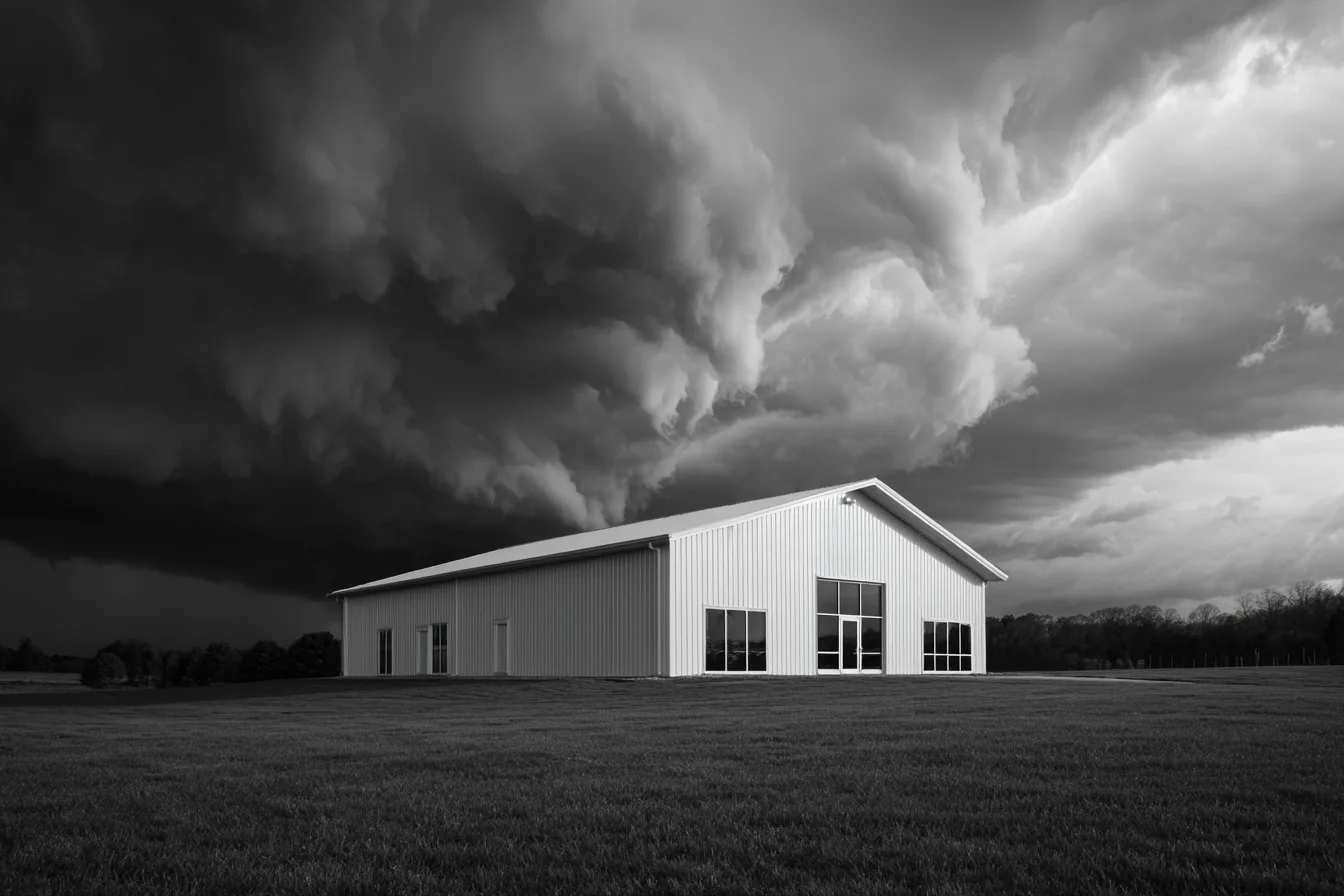
There’s a common misconception that “metal buildings” are just glorified sheds. In reality, modern post-frame construction is a highly engineered system that offers some of the best storm durability on the market. When a pole barn is designed correctly, it doesn’t just survive severe weather—it excels in it.
Understanding the durability of a pole barn home comes down to three pillars: Structural Load Distribution, Anchoring Depth, and Material Integrity.
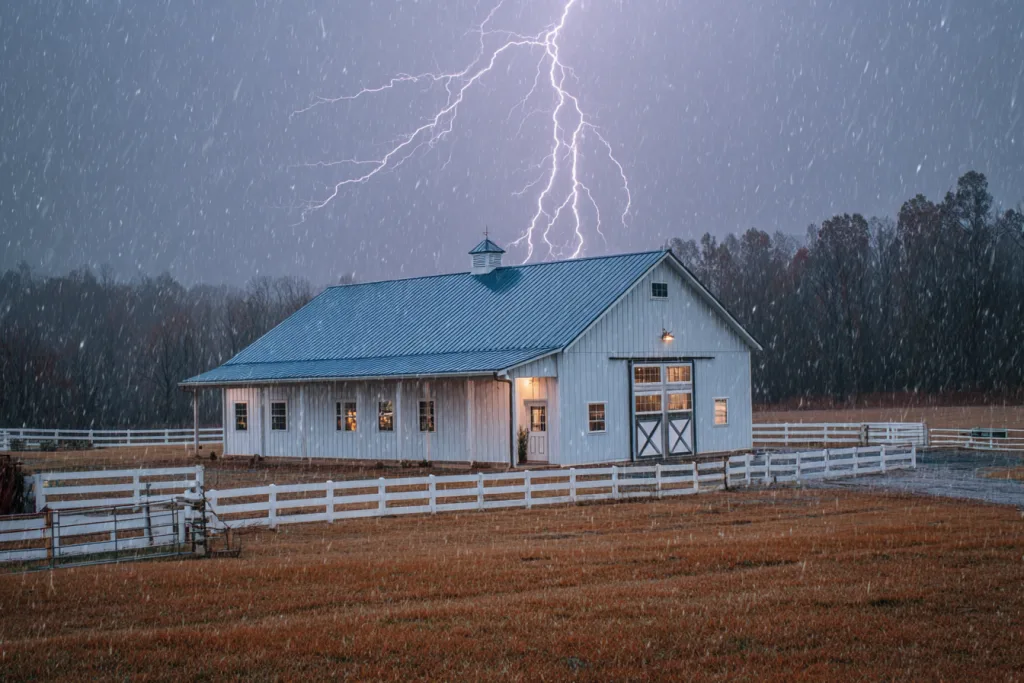
Properly designed pole barns can perform exceptionally well in heavy rain, wind, and severe weather events.
The Structural Backbone: Why Post-Frame Wins
Unlike traditional stick-built homes that rely on many small studs, pole barns utilize a post-frame system. Massive vertical posts are either embedded deep into the earth or secured to engineered foundations, creating a rigid, resilient skeleton.
Key Structural Advantages
- Superior Force Distribution: Fewer load-bearing walls mean wind forces are distributed across the entire frame rather than a single weak point.
- Anti-Uplift Anchoring: Deep-set posts are significantly more resistant to “lifting” during high-wind events compared to standard mudsills.
- Flexural Strength: The framing is designed to absorb and dissipate stress from lateral winds.
Expert Insights: Identifying “Hidden” Storm Damage
Even if a building looks intact from the outside, high-wind events can cause non-visible structural shifts. In the video below, building experts explain what to look for after a storm hits, including slotted steel fasteners and minor column shifting [00:02:17].
Being proactive with a building inspection report [00:03:32] and early insurance documentation [00:04:22] is essential for protecting your investment long-term.
Rain and Flood Resistance: Protecting the Foundation
Pole barn homes are resilient in heavy rain, but they are not immune to soil erosion. A major risk during tropical systems and heavy downpours is “washout,” where water sheds off the roof and creates hollow cavities around your foundation posts [00:03:01].
As shown in the video, active site management—such as packing dirt tight around the pad [00:03:29] and using temporary tin or plastic to divert water—is critical until permanent gutters can be installed.
Critical Factors for a Storm-Proof Build
- Code Compliance: Ensure plans are stamped for local wind/snow loads. See our barndominium building codes.
- Post Depth: Posts must be below the frost line (3–6 feet) to prevent shifting or uplift.
- Connection Strength: Use hurricane ties and reinforced brackets at all truss-to-post junctions.
- Impact Resistance: 26-gauge metal panels offer the best protection against hail and debris.
- Proper Grading: Engineered site prep ensures water flows away from the structure, preventing the “washout” risks seen above.


What do you think?
It is nice to know your opinion. Leave a comment.