








Appraising a Barndominium: What You Need to Tell Your Bank
- A solid barndominium appraisal starts with complete plans, specs, and a detailed cost breakdown.
- Banks rely on appraisals built around comparable sales, cost data, and local market behavior.
- Your choice of builder, construction method, and finishes have a direct impact on appraised value.
- Preparing the right documentation up front reduces delays and can improve loan terms.
Financing a barndominium lives or dies on one thing: the appraisal. Lenders will not move forward without a credible, well-documented opinion of value. This barndominium appraisal guide explains what your bank and appraiser need to see, how value is determined, and what you should provide as the owner to avoid surprises.
Why Barndominium Appraisals Are Different (But Not “Special”)
From a professional standpoint, barndominiums are appraised using the same core methods as any residential property. The wrinkle is that many markets have limited sales data for this type of structure, and not every lender or appraiser is experienced with them.
Appraisers working under USPAP and lender guidelines (see the Appraisal Institute for education standards) must answer three questions:
- What is the most appropriate market segment for this barndominium (rural residential, hobby farm, luxury country estate, etc.)?
- Are there recent, relevant comparable sales to support the value?
- Are the design, construction, and features typical and marketable in the area?
As experienced barndominium builders, we design and document projects specifically to answer those questions in a way lenders can trust.
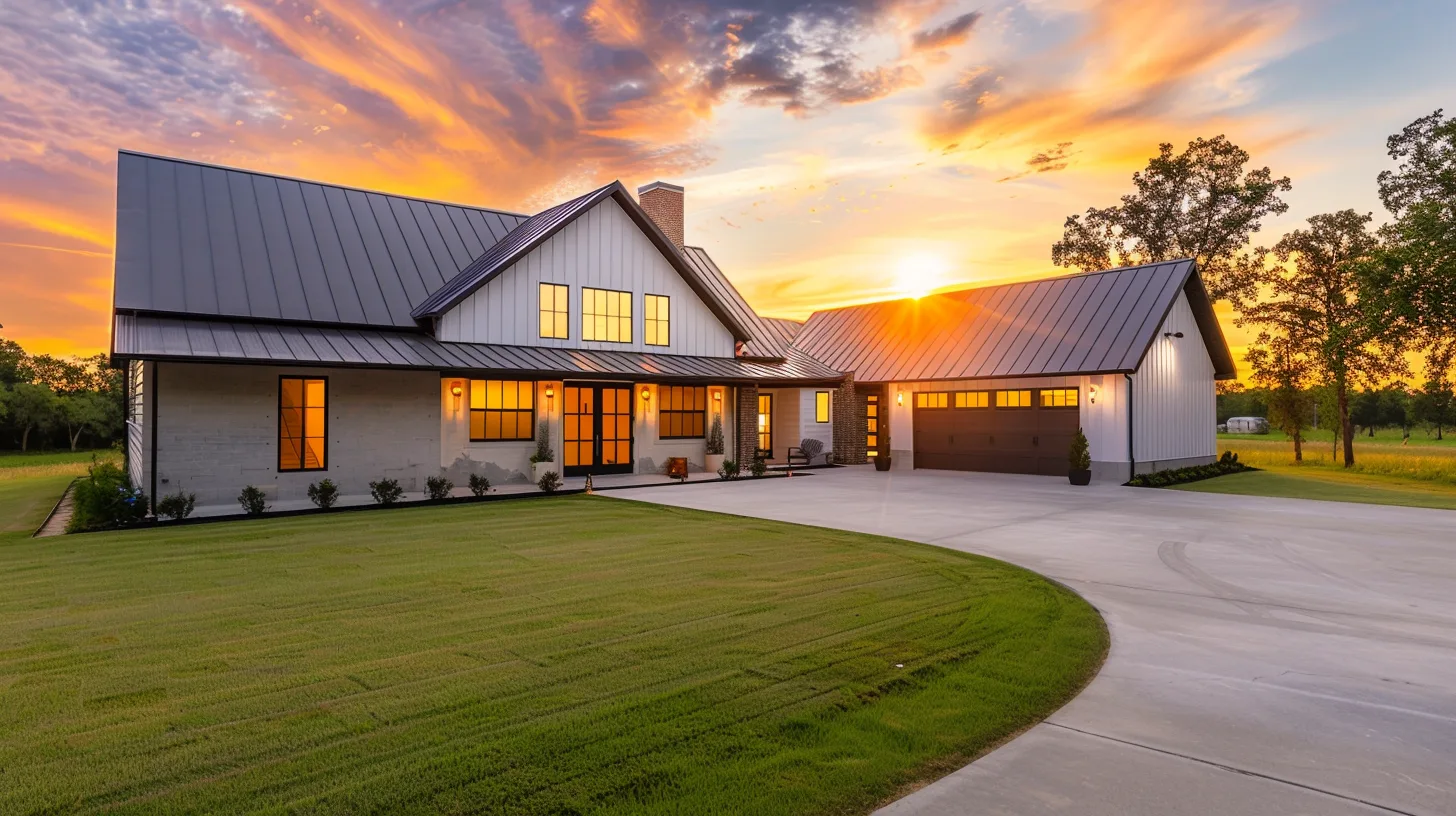
A modern barndominium home on rural acreage, showcasing the type of property evaluated during a professional appraisal for financing or resale.
How Lenders Typically Appraise a Barndominium
1. Sales Comparison Approach
This is usually the primary approach for a residential loan. The appraiser looks for:
- Recent sales (ideally < 12 months) of barndominiums or similar custom homes
- Similar square footage, quality level, and site/acreage characteristics
- Adjustments for shop space, oversized garages, and unique amenities
In markets with few barndominium sales, the appraiser may blend:
- High-quality metal or post-frame homes
- Custom rural homes with large shops or detached barns
- Conventional homes that match your finishes and size, with careful adjustments
2. Cost Approach
When comparable sales are thin, the cost approach carries more weight. The appraiser will:
- Estimate land value based on recent vacant land sales.
- Estimate replacement cost new for your barndominium using local cost data.
- Subtract physical and functional depreciation (if existing), then add land value.
This is where a professional builder’s detailed bid is critical. Our itemized pricing helps the appraiser cross-check their cost data with real, current market numbers.
3. Income Approach (Occasionally)
If the barndominium will be used as a long-term rental or has a clear income stream, some lenders may ask for an income approach. For owner-occupied primary residences, this is less common, but it can come into play for mixed-use or investment properties.
What You MUST Tell Your Bank and Appraiser
Strong appraisals start with strong documentation. Before your lender orders the appraisal, be ready to provide the following.
1. Complete Plans and Elevations
- Floor plans with dimensions and room labels
- Exterior elevations showing roof pitch, height, and façade materials
- Building cross-sections (showing slab, framing, and insulation details)
- Site plan with driveway, utilities, and building placement
These allow the appraiser to clearly classify your project as a residential structure, not an agricultural or commercial building.
2. Detailed Specifications (Specs) Sheet
Appraisers must compare “like with like.” A spec sheet bridges the gap between a basic shell and a high-end custom home. Provide:
- Foundation type and thickness, rebar, and vapor barrier details
- Frame system (post-frame, red-iron, or hybrid) and exterior metal gauge
- Roof system, underlayment, and insulation values (R-values)
- Window and door types (vinyl vs. aluminum, double- vs. triple-pane)
- HVAC type, efficiency ratings, and duct layout (if available)
- Interior finishes: flooring, cabinetry, countertops, trim, and fixtures
3. Builder Contract or Cost Breakdown
Lenders want to see that cost and value are in line. A detailed construction contract helps them and the appraiser understand the scope. Our barndominium contracts typically break out:
- Site work and utilities
- Slab, foundation, and structural shell
- Interior framing, insulation, and drywall
- Mechanical, electrical, and plumbing (MEP)
- Interior and exterior finishes
To understand how this ties directly into the loan process, review our barndominium financing page for lender-specific requirements and example draw schedules.
4. Site and Land Information
Land characteristics can dramatically shift value. Provide:
- Recent survey or plat
- Driveway and access details (easements, recorded access)
- Utility availability (well/septic vs. city services)
- Zoning, deed restrictions, and any HOA requirements
- Topography notes, floodplain data, and any special site work required
How to Help Your Appraiser Support the Highest Credible Value
There are ethical limits to how involved you and your builder can be in an appraisal, but you can and should provide high-quality information.
Provide a Clean, Appraiser-Friendly Package
Hand the lender (who will forward to the appraiser) a single, organized PDF that includes:
- Cover page with project address, your contact info, and builder info.
- Table of contents.
- Architectural plans and elevations.
- Spec sheet and product lists.
- Signed builder contract and cost breakdown.
- Survey, site plan, and any relevant permits.
This saves the appraiser time and reduces the odds of missed details that could understate quality or functionality.
Clarify Use and Function Early
Is your barndominium:
- A primary residence with attached shop?
- A weekend home and equipment storage?
- A mixed-use property with a small business area?
Use impacts which comps are appropriate. Being transparent about intended use helps the appraiser position your property correctly within the market.
Document High-Performance Features
Energy-efficient and durability upgrades often add cost faster than value unless they’re properly documented. Make sure you call out:
- Spray foam or high-R insulation packages
- High-efficiency HVAC and water heaters
- Upgraded windows and doors
- Solar or backup power systems
- Fire-resistance or wind-rating upgrades
Each of these can support higher value when they are typical or desirable in your local market.
Common Barndominium Appraisal Pitfalls (and How to Avoid Them)
Pitfall 1: Treated as a Barn, Not a Home
Cause: Incomplete plans or lack of finished interior specs.
Fix: Provide residential-grade plans with full interior layouts, codes, and finish details.
Pitfall 2: Overbuilding for the Area
Cause: Extremely high-end finishes in a low-priced market.
Fix: Work with a builder who understands local sale prices and can guide you to a balanced spec level.
Pitfall 3: Insufficient Comparable Sales
Cause: Rural or emerging barndominium market.
Fix: Choose a lender comfortable with rural construction and an appraiser who can reasonably blend custom home and barndominium comps.
Working With a Builder Who Understands Appraisals
Not every contractor structures bids and documentation with lenders in mind. As a specialized barndominium builder, we:
- Design plans that clearly classify the structure as residential.
- Produce detailed, line-item bids that map cleanly to appraisal cost data.
- Coordinate with you and your lender on draw schedules, inspections, and change orders.
- Help you anticipate appraisal-sensitive decisions during design, not after the fact.
If you are still early in planning, pair this barndominium appraisal guide with our design resources and financing information on the Barndo Builders site so every decision supports both your lifestyle and the bank’s valuation process.
Next Steps Before You Apply for Your Loan
To get your project “appraisal ready,” follow this checklist:
- Finalize your floor plan and elevations.
- Select finishes to at least a preliminary spec level.
- Obtain a full builder proposal with a cost breakdown.
- Gather land documents (survey, deed, zoning, HOA rules).
- Talk with your lender about their preferred appraisal form and any specific barndominium guidelines.
- Assemble everything into a single digital package to submit with your loan application.
With the right preparation and the right builder, a barndominium appraisal can be just as straightforward—and just as favorable—as a conventional custom home. Bring your lender a well-documented project, and you’ll be in a strong position to secure the financing structure that fits your goals.


What do you think?
It is nice to know your opinion. Leave a comment.