


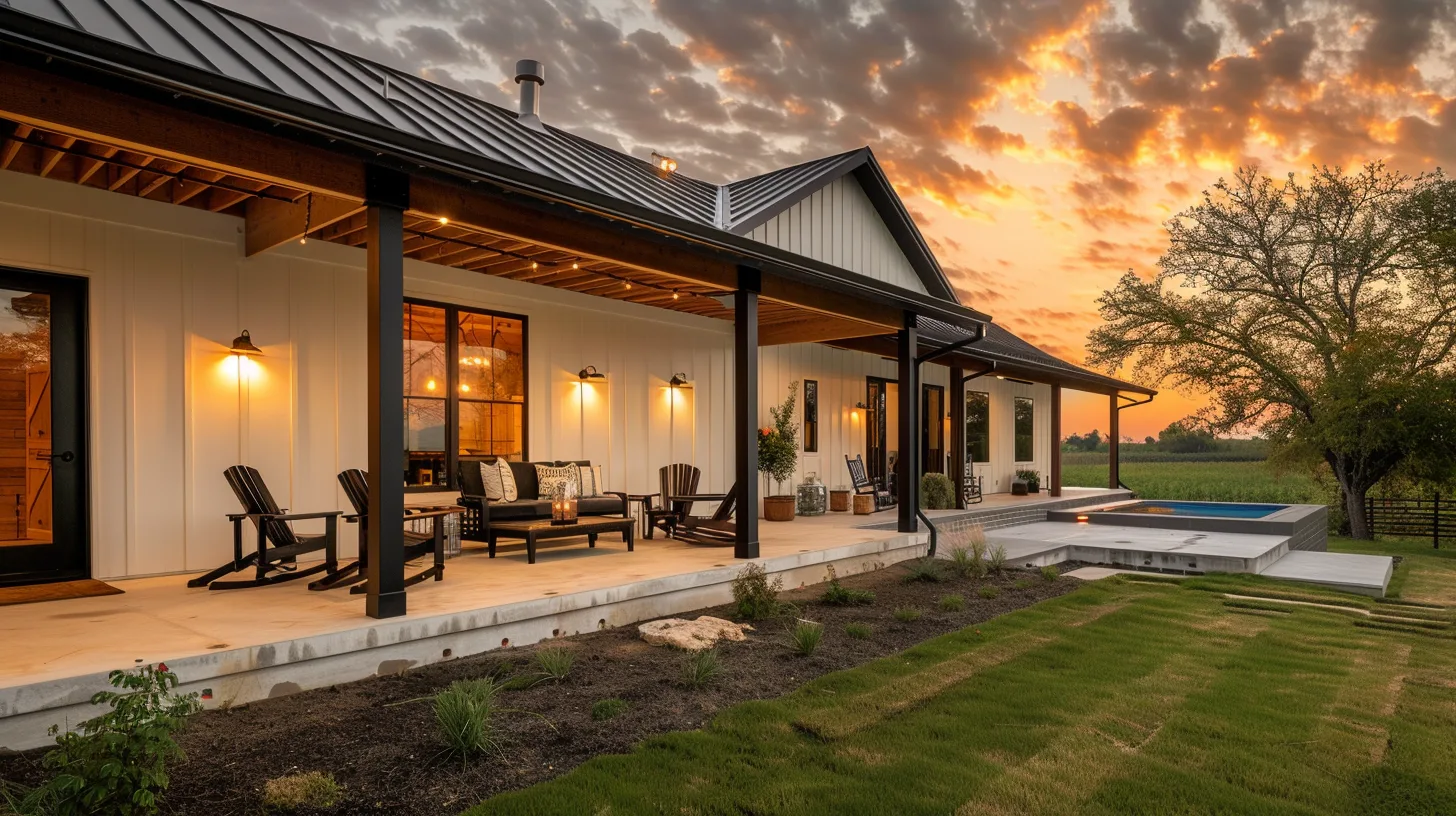






Barndominium Porch Ideas: Wrap-Arounds, Screened-In & Smart Design Upgrades
- Plan porch design with your barndominium shell from day one to avoid structural and drainage issues.
- Wrap-around porches maximize shade, views, and curb appeal; screened-in porches maximize comfort and seasonal use.
- Optimal porch depth is 10–12 ft for true outdoor living and dining, not just a narrow walkway.
- Structural ties, column layout, and water management are as important as aesthetics in porch performance.
- Combining open and screened zones delivers the most flexible, resale-friendly barndominium porch layout.
When you’re building a barndominium, the porch is not an afterthought—it’s one of the defining design elements. The right porch layout can transform a simple metal shell into a warm, livable home that blurs the line between indoor comfort and outdoor views.
Below, we’ll walk through builder-level barndominium porch ideas, with a focus on wrap-around and screened-in options, including structural considerations, layout strategies, and materials that actually perform over time.
Start With the Floor Plan: Integrating Porch and Barndo Shell
Your best porch designs start at the same time as your structural layout. That’s why many clients begin with engineered barndominium plans & designs that already anticipate porch roof loads, column spacing, and sightlines.
Key planning questions before you sketch anything
- Sun path: Where does the sun rise and set relative to your main views?
- Wind and weather: Which direction do storms and prevailing winds come from?
- Primary view axis: Which direction do you want your main living room and porch to face?
- Traffic paths: How will people move from parking to entry, and from kitchen to outdoor dining?
Decisions about wrap-around versus screened-in should be made while you’re still adjusting window placements, door locations, and rooflines, not after framing is complete.
Wrap-Around Porch Ideas for Barndominiums
Wrap-around porches are classic for barndos: they extend your roofline and offer deep shade, all while visually grounding the tall vertical profile of a metal building.
1. Decide How Many Sides to Wrap
- Two-side wrap: The most efficient option, commonly front + one gable end.
- Three-side wrap: Ideal on scenic lots where you want near-panoramic views.
- Full wrap-around: Premium curb appeal and circulation, but more structure and roofing cost.
Often, a cost-effective approach is a full-depth porch along the front and one side, with a shallower or uncovered walkway on the remaining sides.
2. Dial in the Right Porch Depth
For real outdoor living, not just a token overhang, depth matters:
- 8 ft minimum: Works for rocking chairs and a simple seating line.
- 10–12 ft recommended: Allows seating + circulation + small dining table.
- 12–14 ft: Best for porch swings, outdoor kitchen, or large dining zones.
Remember, deeper porches add roof load and change how water is shed. This should be engineered into your barndominium frame from the start.
3. Structural & Water Management Details
Builder-grade wrap-around porches must account for:
- Beam sizing: Longer spans between posts require deeper or engineered beams.
- Post foundations: Continuous footing or individual piers sized for local frost and soil conditions.
- Tie-in to main roof: Proper flashing and connection details to avoid leaks at the intersection of porch and main roof.
- Gutter and drainage: Direct roof runoff away from piers and slab to reduce heave or erosion.
Resources such as Landscaping Network provide useful guidance on grading, water movement, and landscape integration that should be coordinated with your porch layout.
4. Design Features That Elevate Wrap-Around Porches
- Mixed rooflines: Combine shed-roof sections with gabled entries for architectural interest.
- Column style: From simple steel posts to timber-wrapped or masonry bases for a heavier, farmhouse look.
- Flooring: Stained concrete, composite decking, or textured tile with non-slip ratings.
- Lighting: Layered lighting – recessed cans, pendant fixtures over seating, and step lights.
Screened-In Barndominium Porch Ideas
Screened-in porches are about comfort and usability. They let you enjoy airflow and views without insects, wind-blown debris, or some of the pollen.
1. Optimal Location for a Screened Porch
From a builder’s perspective, the best screened-in zone typically:
- Connects directly to the main living room or kitchen.
- Is placed on the shaded side (often north or east in hot climates).
- Is sheltered from major storm winds when possible.
Many owners opt to screen in only one
section of a larger wrap-around porch, creating both open and protected zones.
2. Screen Framing & Durability Choices
When evaluating barndominium porch ideas, consider the frame and screening system:
- Aluminum screen frames: Lightweight, corrosion-resistant, good for metal barndos.
- Heavy-duty fiberglass screen: Better puncture resistance and long-term clarity.
- Pet-resistant mesh: Thicker material for households with dogs or cats.
- Kick-plates or low rail: Protect the bottom 24–36″ from furniture or kids.
Ensure all framing is securely anchored to the main structure or porch beams and not just surface-mounted to deck boards.
3. Comfort Systems for Screened Porches
- Ceiling fans: Choose outdoor-rated fans with corrosion-resistant hardware.
- Electrical layout: Plan outlets for heaters, grills (where appropriate), and string lights.
- Infrared heaters: Extend seasonal use, especially in shoulder seasons.
- Removable panels: In some climates, consider vinyl or glass panels to covert the porch to a three-season room.
Combining Wrap-Around and Screened-In Porches
Many of the highest-performing barndominium layouts combine both concepts. An example configuration:
- Front and side wrap-around: A 10–12 ft deep open porch along the front and one long side for circulation and views.
- Screened corner zone: A 12–14 ft deep screened area at the rear corner, accessible from the living room, used for dining and lounging.
- Open grilling deck: Just off the screened porch, with appropriate clearances from combustible surfaces and overhead roofs.
This hybrid approach gives you:
- Walk-around access for maintenance and shade.
- Breezy, open-air seating zones.
- A bug-free, all-weather core outdoor room for gatherings.
Material Choices for Long-Term Performance
A well-built barndominium porch must match the life expectancy of your main structure. Core material decisions include:
1. Columns and Structure
- Steel posts: Match metal building systems; require proper coating and base isolation.
- Pressure-treated posts: Economical; must be detailed to avoid ground contact rot.
- Timber-wrapped steel: Structural steel core with wood cladding for a rustic look.
2. Flooring Systems
- Monolithic or thickened-edge slab: Excellent for load transfer; easy to stain or tile.
- Framed deck: Useful where grade slopes significantly; choose rot-resistant framing.
- Decorative concrete: Stamped or broom-finished with pigment for traction and aesthetics.
3. Railings and Guards
For elevated porches, railings must meet local code for height and spacing. Your builder will design to applicable residential code standards, such as typical 36–42″ rail height and baluster spacing that does not permit a 4″ sphere to pass through (check your local jurisdiction or state residential code).
Landscape Integration and Site Design
The best barndominium porch ideas extend beyond the slab. Thoughtful grading, plantings, and paths make your porch feel intentional and connected to the land.
- Steps and landings: Generous landings at major doors for easier furniture movement.
- Walkways: Clear, well-lit paths from parking to primary entry.
- Drainage swales: Direct water away from porch footings and barndo slab.
- Planting zones: Use low-maintenance beds around columns to visually soften the structure.
Again, resources like Landscaping Network showcase practical ways to integrate patios, walks, and planting around large structures like barndominiums.
Practical Steps to Design Your Barndominium Porch
If you’re ready to move from ideas to a buildable plan, follow this sequence:
- Define your lifestyle needs: Daily coffee spot, outdoor dining, kids’ play area, etc.
- Map sun, wind, and views: Decide which sides deserve the deepest porches.
- Choose your porch mix: Open wrap-around, partial wrap, screened-in corner, or hybrid.
- Set target depths: Default to 10–12 ft minimum for primary living zones.
- Coordinate with structural design: Work with your barndominium designer or engineer to size beams, posts, and footings.
- Detail finishes: Columns, floor material, lighting, fans, and railing style.
- Integrate landscape: Plan paths, steps, and basic drainage before pouring concrete.
A well-planned porch is one of the highest-impact upgrades you can make to a barndominium. It improves day-to-day livability, boosts curb appeal, and can significantly strengthen resale value.
To see how porch layouts are integrated into full barndominium concepts, explore our curated barndominium plans & designs and use them as a starting point for your own custom wrap-around or screened-in porch configuration.


What do you think?
It is nice to know your opinion. Leave a comment.