





Sustainable Materials for an Eco Friendly Barndominium
Key Takeaways
- An eco friendly barndominium starts with a high‑performance shell: framing, roof, insulation, and windows designed to minimize energy loss.
- Sustainable material choices focus on durability, recycled content, low toxicity, and long‑term operating savings, not just upfront cost.
- Smart orientation, daylighting, and efficient HVAC and water systems compound the benefits of green materials for comfort and lower bills.
Designing an eco friendly barndominium is about more than adding solar panels. The real efficiency and comfort gains come from the structure, materials, and systems you choose long before finishes are installed. As dedicated barndominium builders, we focus on building envelopes and material selections that deliver durability, lower utility bills, and healthier indoor air while supporting your design vision and budget.
Below, we break down the critical material and design decisions that shape a truly sustainable barndominium.
1. Structural Systems for an Eco Friendly Barndominium
Steel vs. Wood Framing
Most barndominiums use either steel post‑frame or hybrid steel/wood framing. From a sustainability perspective, both can be excellent when sourced and detailed properly.
- Recycled steel framing: Structural steel often contains a high percentage of recycled content and is fully recyclable at end of life. Its long lifespan and dimensional stability reduce maintenance and material replacement over time.
- Engineered wood: Products like LVL, glulam, and I‑joists use smaller, fast‑growing trees efficiently, and when sourced from responsibly managed forests, they support sustainable forestry practices.
For many owners, the optimal solution is a steel shell paired with engineered wood for interior framing. This hybrid strategy enables wide, open spans typical of barndominiums while supporting efficient insulation and mechanical layouts.
Foundation and Slab Choices
Most barndominiums sit on a monolithic or slab‑on‑grade foundation. From an eco‑design standpoint, the priorities are:
- High‑performance under‑slab insulation to prevent heat loss through the concrete.
- Thermal breaks at the slab edge to reduce energy loss and condensation risk.
- Moisture control via vapor barriers and proper site drainage.
The slab can double as your finished floor (polished concrete), eliminating additional flooring materials and adhesives and enhancing thermal mass for more stable indoor temperatures.
2. Building Envelope: Insulation, Air Sealing, and Siding
Insulation Strategies that Matter
The building envelope is where an eco friendly barndominium wins or loses most of its energy performance. Effective strategies include:
- Closed‑cell spray foam: Adheres to metal panels, provides high R‑value per inch, acts as an air and vapor barrier, and stiffens the structure. Ideal for roof and wall assemblies in metal barndos.
- Hybrid systems: A thin layer of spray foam to air‑seal the shell, followed by batt or blown‑in insulation to increase R‑value cost‑effectively.
- Cellulose or high‑density fiberglass: For interior framing cavities, these can offer excellent performance when properly installed and air‑sealed.
A continuous air barrier, especially at roof‑wall intersections and around penetrations, is essential for reducing energy use and preventing moisture problems.
Eco Conscious Siding and Exterior Finishes
Siding is both a design and performance decision:
- Metal siding: Highly durable, low maintenance, and recyclable. Light‑colored finishes with reflective coatings support cooler interiors in hot climates.
- Fiber‑cement siding: Very durable and fire‑resistant, with long paint cycles and good dimensional stability.
- Engineered or treated wood accents: Used strategically, these add warmth and character without large maintenance burdens.
Pairing durable claddings with properly detailed weather‑resistive barriers ensures a long‑lasting, low‑maintenance exterior.
3. Roofing Systems for Energy Efficiency and Longevity
Cool Roofs and Metal Panels
Barndominiums frequently use standing seam or ribbed metal roofing. When specified correctly, this can be a highly sustainable choice:
- Reflective coatings and light colors can significantly reduce heat gain, lowering cooling loads.
- High durability (often 40–60 years) means fewer replacements and less material waste over the life of the structure.
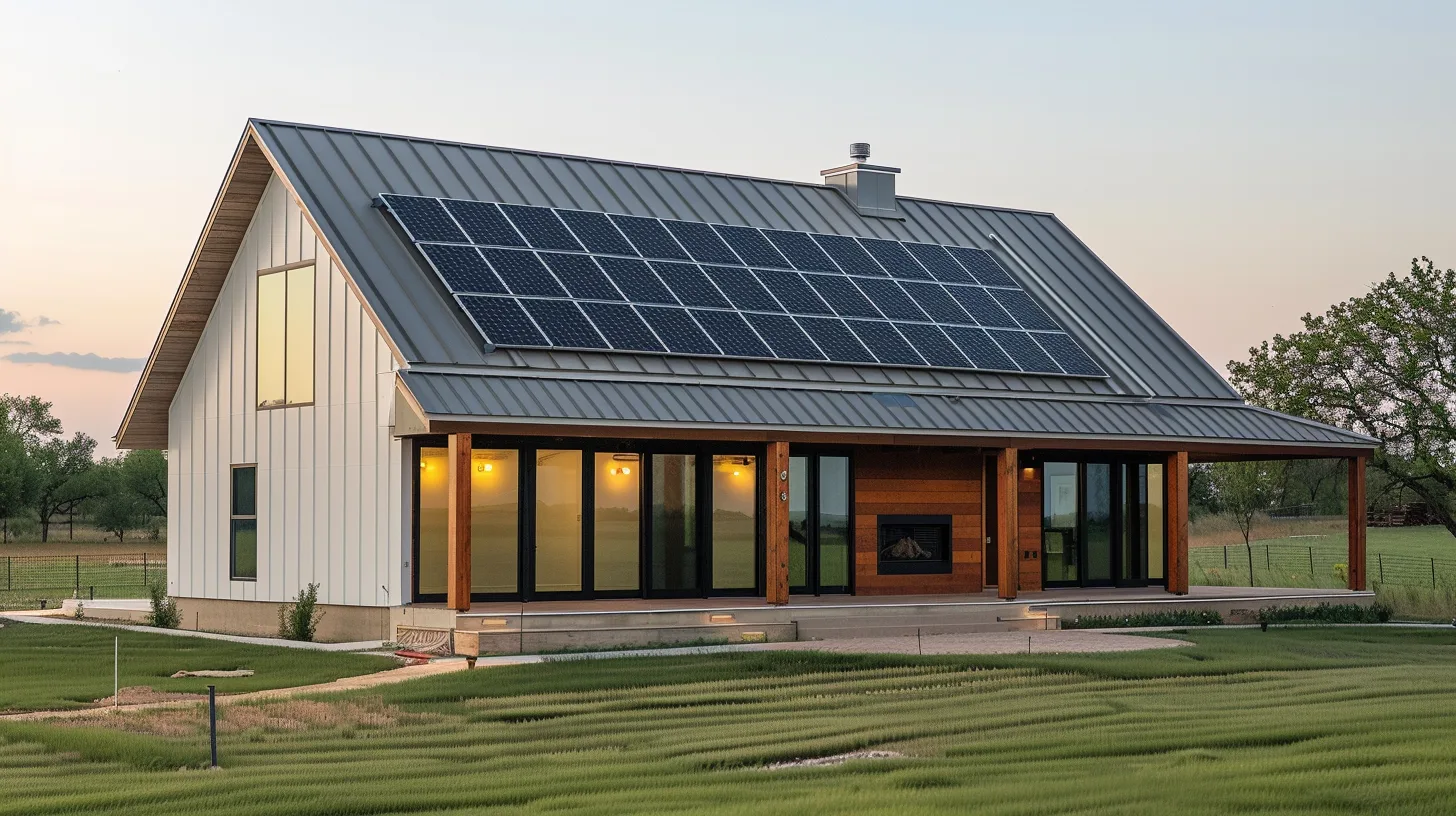
- Solar‑ready roofs integrate well with standing seam profiles, which allow clamp‑on solar attachments with minimal penetrations.
A ventilated roof assembly, combined with radiant barriers and robust insulation, helps maintain stable interior temperatures and extend roof life.
4. Windows, Doors, and Daylighting
High‑Performance Glazing
Large windows are a hallmark of many barndominium designs, but unmanaged glass can hurt performance. For an eco friendly barndominium, prioritize:
- Low‑E, double‑ or triple‑pane windows with appropriate solar heat gain coefficients (SHGC) for your climate.
- Tight weatherstripping and quality installation to prevent air leaks.
- Thermally broken frames (often aluminum or fiberglass) to reduce heat transfer.
Orientation and Shading
Thoughtful orientation dramatically impacts efficiency. A common strategy is:
- Maximize glazing on the south side (in most U.S. climates) for winter solar gain.
- Use roof overhangs, awnings, or exterior shading to block high summer sun.
- Limit large west‑facing glass to reduce afternoon heat gain.
These passive design choices improve comfort and reduce HVAC loads without increasing material complexity.
5. Interior Materials: Healthy, Low‑VOC, and Durable
Flooring Options
Sustainable flooring for barndominiums balances durability, maintenance, and indoor air quality:
- Polished concrete slab: Uses the existing structure, requires minimal additional materials, and provides excellent thermal mass.
- Engineered hardwood: Uses less solid wood, can be sourced from certified forests, and offers a warm, timeless appearance.
- High‑recycled‑content tile or LVT (when low‑VOC) for wet areas.
Low‑Emission Finishes
To maintain a healthy indoor environment:
- Specify low‑VOC or no‑VOC paints, sealers, and adhesives.
- Choose formaldehyde‑free cabinetry and composite wood products where possible.
- Ensure adequate mechanical ventilation, especially in tight, well‑insulated homes.
6. Mechanical Systems and Water Efficiency
Right‑Sized, Efficient HVAC
Once the envelope is optimized, HVAC systems can be smaller and more efficient. Options include:
- Ducted or ductless mini‑split heat pumps for high efficiency and zoning flexibility.
- Energy recovery ventilators (ERVs) to bring in fresh air while recovering heating or cooling energy.
- Smart thermostats and zoning to match conditioning to occupancy patterns.
Water‑Saving Fixtures and Strategies
Water efficiency complements material sustainability. Consider:
- EPA WaterSense‑rated faucets, toilets, and showerheads for lower water use.
- On‑demand or recirculating hot water systems to reduce wait times and waste.
- Rainwater collection (where allowed) for irrigation or non‑potable uses.
7. Planning Your Eco Friendly Barndominium
The most cost‑effective sustainable decisions are made early in design. A typical process might look like this:
- Clarify goals: Energy savings, low maintenance, indoor air quality, or certifications such as LEED from organizations like the U.S. Green Building Council.
- Study your site: Sun path, prevailing winds, views, and drainage inform orientation and envelope design.
- Select structural system: Steel, wood, or hybrid framing based on span needs, budget, and local availability.
- Optimize the envelope: Insulation, air sealing, window package, and roof assembly tailored to your climate zone.
- Specify systems and finishes: Efficient HVAC, water‑saving fixtures, durable low‑VOC materials.
If you are still defining your concept, it can help to revisit the fundamentals of what is a barndominium and how its flexible shell makes sustainable upgrades especially practical.
Why Work with Specialized Barndominium Builders
Eco friendly design is most effective when your builder understands both barndominium construction methods and building‑science principles. Details like thermal breaks at girts, condensation control on metal surfaces, and sequencing of air and vapor barriers are specific to this building type.
At Barndo Builders, we integrate these strategies from concept through construction, helping you balance appearance, performance, and cost. To explore layouts, structure types, and design approaches that support your sustainability goals, visit our design resources section and related guides on barndominium planning and materials on Barndo Builders.
For owners seeking third‑party frameworks and standards for green building, organizations such as the U.S. Green Building Council provide widely recognized guidance on energy, water, and materials strategies that can be adapted to barndominium projects of all sizes.


What do you think?
It is nice to know your opinion. Leave a comment.