





Is a Barndominium Considered a Residential Dwelling?
Whether a barndominium is legally considered a residential dwelling is one of the most important questions to resolve before you design, finance, insure, or start building. At BarndoBuilders.net, we specialize in code-compliant, fully habitable barndominiums, so we deal with this classification question on almost every project.
- A barndominium can be a residential dwelling if it is designed, permitted, and inspected as a home.
- Local building codes and zoning – not the word “barn” – determine its legal classification.
- Classification impacts permits, taxes, insurance, and financing.
- Mixed-use barndominiums (home + shop) may be partly residential and partly non-residential.
Are Barndominiums Residential by Definition?
The short answer: not automatically. A barndominium is a building concept, not a legal category in most codes. Your local jurisdiction decides if it is residential based on:
- How the structure is designed (habitable or not)
- How it is permitted (residential, agricultural, commercial, or mixed-use)
- Which codes it is engineered to meet
- How it is actually used (full-time home, weekend cabin, shop with office, etc.)
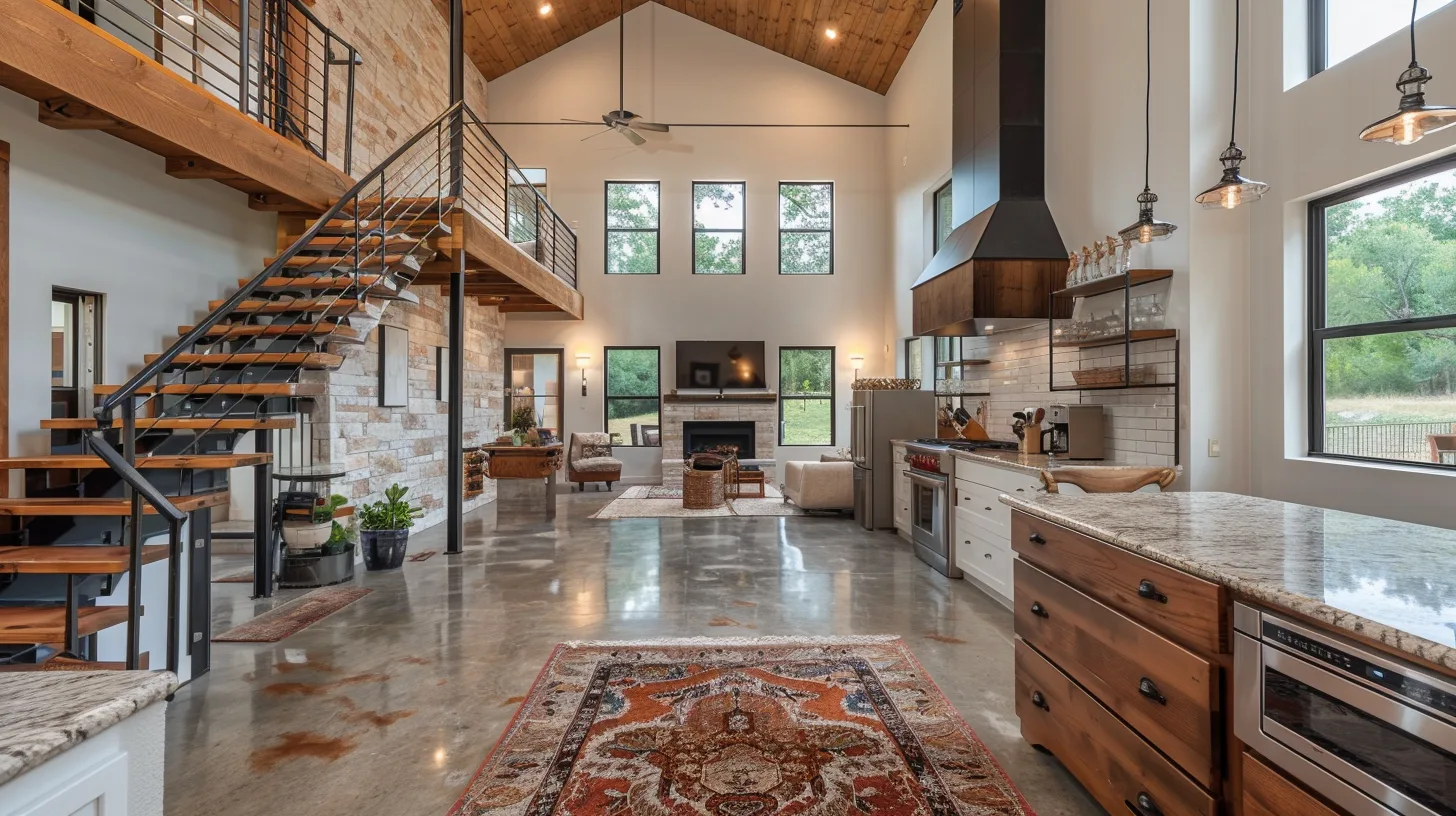
Most modern barndominiums that we build are permitted as single-family residences under a residential building code. In those cases, they are legally and functionally residential dwellings, even though the exterior might look like a barn or metal building.
If you are still in the research phase, it can help to first understand what is a barndominium in construction and planning terms. From there, the code path becomes clearer.
How Building Codes Classify Barndominiums
Most U.S. jurisdictions base their rules on model codes developed by the International Code Council. You can learn more about those standards at iccsafe.org. Whether barndominiums are residential in your area depends largely on which of these model codes your local authority adopts and how they modify them.
International Residential Code (IRC)
Where the IRC is adopted, a barndominium designed for one or two families will typically be treated as a dwelling unit if it meets IRC requirements for:
- Minimum room sizes and ceiling heights
- Safe egress (doors, stairs, windows)
- Structural design for wind, snow, and seismic loads
- Energy efficiency (insulation, air sealing)
- Plumbing, mechanical, and electrical systems
When our engineering and plans are reviewed and approved under the IRC (or a state-modified version), your barndominium is officially treated as a residential structure.
International Building Code (IBC) and Mixed-Use
Some projects, especially larger or more complex ones, fall under the International Building Code (IBC). This is more common when the building includes:
- Extensive shop or warehouse space
- Commercial activity (retail, office, or light industrial)
- Multiple dwelling units
In these cases, part of the structure may be classified as residential occupancy, while other areas are classified as storage, business, or factory occupancy. Fire separation walls, different egress paths, and sometimes different structural criteria may apply.
Residential Dwelling vs. Agricultural Building
One of the most common misconceptions is that calling a project a “barn” or “ag building” will reduce taxes and requirements while still using it as a home. In practice, that is risky and often illegal.
Key Differences in Classification
- Agricultural buildings are usually exempt from many residential requirements because they are not intended for human habitation.
- Residential dwellings must meet stricter life-safety, structural, and energy standards.
- Mixed-use barndominiums may have a residential portion that is fully code-compliant and an agricultural/shop portion under a different standard.
Trying to occupy an unpermitted ag building as a dwelling can create serious problems:
- Stop-work orders or fines from the building department
- Difficulty obtaining a certificate of occupancy
- Insurance denials or claim disputes after a loss
- Resale complications and appraisal issues
How Zoning Impacts Whether Your Barndominium Is Residential
Even if a barndominium is designed to meet residential codes, it must also be allowed by zoning. Zoning ordinances govern how land can be used, including:
- Whether single-family residences are permitted
- Minimum lot sizes and setbacks
- Height restrictions
- Accessory structures vs. primary residences
Steps to Check Zoning for a Barndominium
- Identify your parcel and zoning district on your city or county GIS or planning map.
- Download the zoning ordinance or development code for your district.
- Confirm that a single-family dwelling is an allowed primary use.
- Check design standards: height limits, setbacks, coverage, and parking.
- Ask the planning department if any design review or conditional use permits apply to metal or barn-style structures.
When we work with clients, we front-load this step into planning so that the barndominium is clearly recognized as a residential dwelling in all approvals.
Why Residential Classification Matters
Once your barndominium is officially recognized as residential, it affects nearly every financial and legal aspect of ownership.
1. Financing and Appraisals
Lenders want to know if they are making a loan on a home, a farm building, or something in between. Residential classification typically means:
- Access to conventional, FHA, or VA mortgage products (subject to lender policy)
- Appraisals based on comparable homes rather than only on land + outbuilding value
- Clearer underwriting criteria for risk and resale
Some lenders are still learning how to underwrite barndominiums. Having full residential permitting and inspections makes those conversations easier.
2. Insurance
Insurers look closely at use and code compliance. A barndominium permitted and inspected as a dwelling is generally insured as a homeowners policy, which can provide broader coverage than a farm outbuilding or commercial policy, especially for:
- Personal property
- Liability coverage
- Additional living expenses after a covered loss
3. Property Taxes
Property tax assessors classify improvements based on use and design. A finished barndominium with HVAC, plumbing, and interior finishes will usually be taxed similarly to other homes of comparable size and quality in your area, even if the shell looks like a barn.
Designing a Barndominium as a Compliant Residential Dwelling
To ensure your barndominium is clearly residential, the design must prioritize life safety, comfort, and code compliance from day one.
Core Residential Design Elements
- Foundation system engineered for your soil and loads
- Structural frame (steel or wood) designed to applicable design loads
- Building envelope with code-compliant insulation and air sealing
- Habitable room layout meeting minimum dimensions and egress
- Mechanical, electrical, and plumbing designed to residential standards
As barndominium builders, we start with your goals (full-time residence, multi-generational home, or home + shop) and then shape a design that your local jurisdiction will recognize as a legitimate dwelling. This keeps you aligned with both legal expectations and long-term resale value.
Frequently Asked Legal-Use Questions About Barndominiums
Can I Live Full-Time in a Barndominium?
Yes—if the structure is approved, inspected, and certified as a dwelling. An unpermitted shop or barn that has been casually converted into a living space usually does not meet this standard. The key is obtaining a certificate of occupancy for residential use.
Will My Barndominium Be Treated as a House When I Sell?
In most markets, a fully permitted, code-compliant barndominium is marketed and appraised as a single-family residence. Appraisers look for:
- Residential permits and inspections
- Quality of finishes and systems
- Comparable sales of similar homes (including other barndos where available)
Can I Combine Home, Shop, and Agricultural Space?
Yes, and this is one of the major advantages of the barndominium concept. The key is to design:
- Clear separations between living and non-living areas
- Fire-rated walls and doors where required
- Proper ventilation and hazard controls in shop or barn areas
Our team routinely designs hybrid barndominiums that satisfy both the owner’s functional needs and the code official’s life-safety expectations.
Next Steps if You Want a Residential Barndominium
- Confirm your zoning allows residential use on your parcel.
- Request your local building department’s requirements for single-family dwellings.
- Decide how much of the building will be habitable space versus shop or barn.
- Work with experienced barndominium designers and builders who understand residential codes and permitting.
When approached correctly, a barndominium is not a legal gray area—it is simply a highly flexible form of residential construction engineered to modern standards. If you are ready to explore designs, budgets, and timelines, our team at BarndoBuilders.net can help align your vision with the residential requirements in your jurisdiction and guide you from concept to code-compliant completion.


What do you think?
It is nice to know your opinion. Leave a comment.